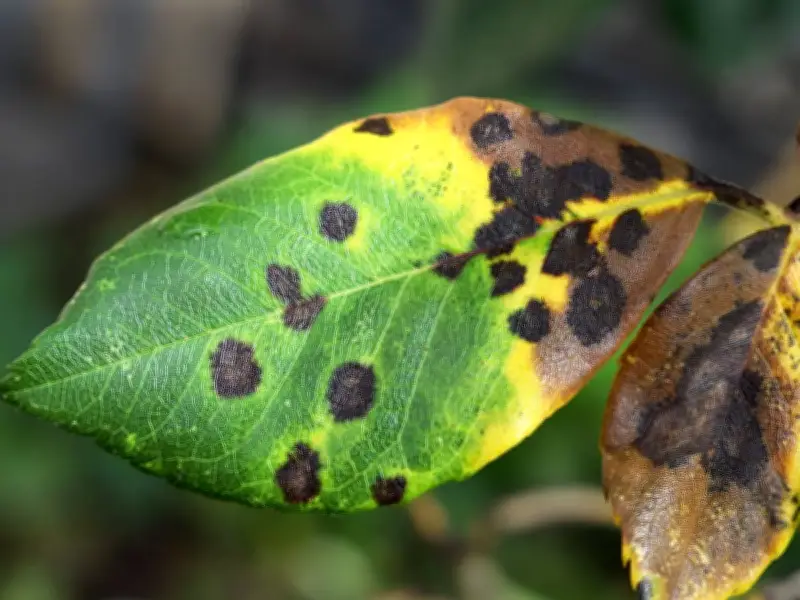
Black spot, a fungal disease that causes roses to lose their leaves, can be most damaging in late autumn just before winter. Wet weather creates ideal conditions for the disease, which rapidly drains the plant of energy and significantly weakens it. Gardeners are being urged to monitor their roses closely during this crucial season.
A rose affected by black spot will shed its leaves and limit the amount of energy it can store before becoming dormant. The disease can persist in the soil, meaning it is likely to return and continue damaging the plant, making it difficult for the rose to produce blooms the following spring.
A Simple Milk Solution
Kevin Lee Jacobs, a gardener and founder of A Garden for the House, has revealed that when his roses developed black spot he simply sprayed them with milk to sort them out. He said: "One part milk and two parts water is the best answer to the disease. When applied weekly, the solution controls black spot as well as any synthetic fungicide, including Chlorotalonil."
According to Kevin, this approach "really works" as he sprayed his roses with full-fat milk solution once a week and discovered it the most effective method for keeping his roses disease-free.
How to Prevent Black Spot
Milk contains proteins such as lactoferrin, which have antimicrobial properties that can stop fungus in rose diseases like black spot from spreading. It is one of the most affordable, straightforward and natural methods of preventing black spot, making it a gardening technique worth attempting if you are concerned about this disease affecting your roses.
All you need to do is combine one part milk with two parts water in a spray bottle to create the mixture, then dampen both the upper and lower surfaces of the leaves. Be sure to spray the roses regularly once a week and it should help maintain their health so you can enjoy abundant blooms next year in spring.
Inspect Roses Regularly
However, it is worth noting that the most effective way to prevent black spot is to inspect roses frequently, as any approach you use will be more successful the sooner you detect the disease. Black spot gets its name as it first appears as dark blotchy circles on the rose leaves. The disease can also make them appear very yellow.
It will then cause roses to begin shedding their leaves, and it is crucial to collect any decaying leaves; otherwise, the spores will simply splash back onto the plant when it rains again. Simply spend a few minutes once a week examining them, gathering any dead leaves from the ground and then spraying them when necessary to keep roses as healthy as possible in autumn.