
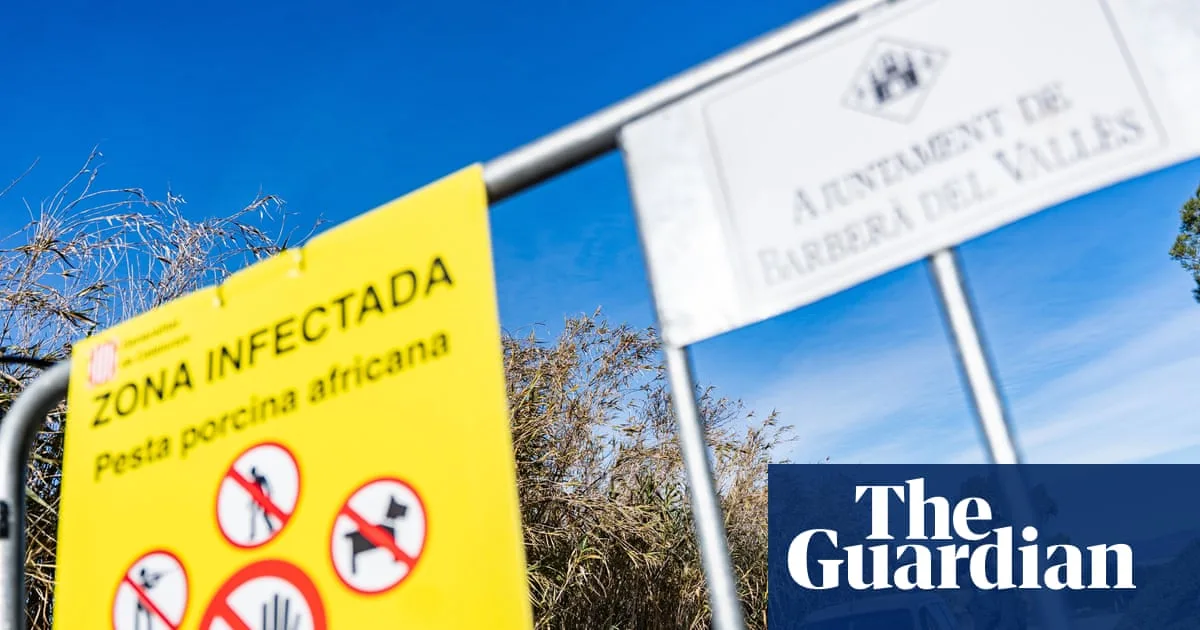
Spanish authorities investigating an outbreak of African swine fever in Catalonia are examining the possibility that the disease may have leaked from a research facility, focusing on five nearby laboratories as potential sources.
Thirteen cases of the fever have been confirmed in wild boars near Barcelona since 28 November. Initially, regional officials believed the disease may have been introduced via contaminated food brought from outside Spain, such as a discarded meat sandwich.
However, Spain's agriculture ministry opened a new line of inquiry after determining that the virus strain found was not the same as those circulating in other EU member states. A report indicated the strain is similar to one detected in Georgia in 2007, which is frequently used in experimental infections in containment facilities.
Catalonia's regional president, Salvador Illa, said on Saturday he had ordered the Catalan agrifood research institute to audit five facilities within 20km of the outbreak site that work with the African swine fever virus. He added that all hypotheses remain open.
The agriculture ministry confirmed all 13 cases were in dead wild boar found within 6km of the initial focus, with 37 other animals testing negative. No trace of the illness has been found on 39 pig farms in a 20km radius, and over 100 personnel from Spain's military emergencies unit have been deployed.
African swine fever is harmless to humans but often fatal to pigs. Spain, the EU's largest pork producer, exported pig meat products worth €5.1bn to other EU countries last year and almost €3.7bn to markets outside the bloc.




