September is a month of two halves. It starts warm and sunny, but by the end, autumn has arrived, bringing more rain, shorter days and cooler temperatures.
Even so, September is an important month for gardeners. The soil is still warm enough for plants to build strong root systems without the stress of summer heat, making it a great time to prepare your garden for the colder months ahead. Pruning is one of the most important jobs to do this month.
It helps plants rest over winter by removing damaged, dead or diseased growth. It also conserves the plant's energy by directing nutrients to the roots and main structure before temperatures drop.

Depending on the plant, pruning at the right time can also boost flowering or improve your harvest. However, knowing which plants to prune can be tricky. Cutting back the wrong ones could cause stress and leave them vulnerable to winter damage.
Six plants you should prune in September
Wisteria
Wisteria needs pruning twice a year: once during winter dormancy before it flowers, and again in late summer after the blooms have faded.
Some gardening experts suggest pruning in July or August, but recent dry spells across parts of the UK have made that timing less straightforward.
Focus on varieties such as Macrobotrys and Alba. Cut back straggly growth and long summer shoots to keep the plant tidy, less tangled and easier to manage.
In a video for the Royal Horticultural Society (RHS), horticulturist Lucie Ponsford said wisteria needs regular trimming "to keep it in check and ensure good flowering".
She explained: "Unlike other woody perennials, you need to prune it twice a year, once at the end of summer and then in winter, and that ensures that the wood will ripen and you'll get a great floral show come May."
On the late summer trim, she added: "By cutting this back, I have allowed airflow through the plant and sunlight to get in and ripen up this wood, therefore allowing the buds here to develop and produce more flowers."
Rosemary, lavender and raspberries
Rosemary
September is the right time to trim rosemary, but don't be too heavy-handed with the shears. Remove no more than a third of the plant, as cutting back too much can stop it from regrowing.
This trim is mainly about tidying the shape and removing spent blooms. Try to allow six to eight weeks for new growth to harden before the first frosts arrive.
Lavender
Pruning lavender in September is essential to stop the shrubs from becoming straggly and woody at the base.
Gardening expert Monty Don wrote in his blog that the best time to prune lavender is when the flowers start to fade, usually between midsummer and late September, depending on the variety.
He advises against waiting until seed heads form or the flowers turn brown, as this leaves less time for the plant to recover before winter. He said: "Cut back hard to a good compact shape, but be sure to leave some new shoots on each stem - lavender will often not regrow from bare wood. These new shoots will grow fast and provide an attractive and healthy cover to protect the plant in winter and provide the basis of next year's display."
Raspberries
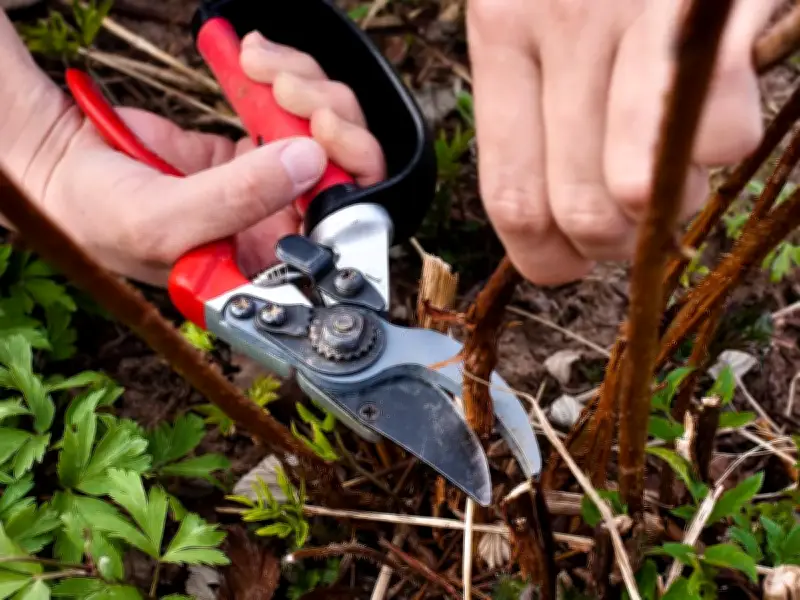
Monty also recommends dealing with summer-fruiting raspberries in September. Cut the old canes right down to ground level, keeping only the new green canes. These will produce next summer's fruit.
He suggests keeping just the six strongest canes, removing any that are weak or growing at an awkward angle. The canes should then be tied to a support structure for the year ahead.
He explained: "I tie the canes with twine to parallel wires fixed strongly between robust posts, weaving round them and fanning them out them evenly as I work along the wire at each level. It is important that it is really secure, as winter winds can catch and damage them."
Roses and jasmine
Roses
In September, tidy up shrub roses, English roses, albas, gallicas and hybrid perpetuals with shears, cutting off any long or untidy shoots.
Monty suggests treating roses like a hedge, shaping them evenly for a neat, compact finish. He said: "Leave a compact, slightly domed bush that is about two-thirds of its former size."

He added: "In March, when you can see clearly without any foliage, you can inspect the shrub to remove any damaged or rubbing stems, but a simple shear in September is enough to keep it healthy and packed with flowers next year."
Jasmine
Summer-flowering jasmine should be trimmed as soon as it has finished blooming, making September the ideal time.
Next year's flowers will likely grow from this year's new shoots, so cut back those fresh stems to their tips. Trim any wayward stems by about a third, cutting just above a leaf joint, and avoid removing more than a third of any stem in one go.