
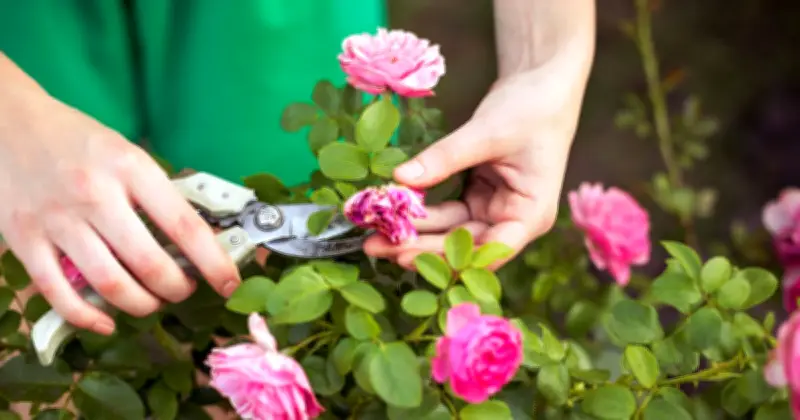
As mid-June arrives, gardens shift into full summer mode. Roses unfurl, bedding plants fill containers, and perennials gain momentum. This is the perfect time for deadheading, a simple task with significant rewards. Removing faded flowers keeps plants looking fresh and redirects energy from seed production to growth, encouraging more blooms.
Encouraging More Flowers
The primary goal of deadheading is to stimulate additional flowering. Once a flower fades, the plant often channels energy into seed formation. By removing the spent bloom, you redirect that energy back into growth, leading to more flowers. This technique works exceptionally well for repeat bloomers like roses, sweet peas, cosmos, marigolds, dahlias, and scabious. For soft-stemmed annuals, simply pinch or snip off the old flower and its stalk. For tougher stems, use clean secateurs and cut back to just above the next healthy leaf or bud.
Preventing Slowdown in Plants
Sweet peas are a classic example where deadheading is crucial. If seed pods develop, flowering quickly declines. Regularly pick blooms for indoor vases and remove faded flowers before pods form. The same approach benefits calendula, zinnias, and cosmos. A few minutes every couple of days keeps plants productive without becoming a chore.
Tidying Heavy Flowers
Some plants require deadheading not just for repeat blooms but for neatness. Peonies, irises, and oriental poppies may not flower again strongly, but removing collapsed flowers keeps borders tidy and prevents soggy petals from resting on foliage. Cut the flower stem back, leaving healthy leaves to feed the plant. For lupins and delphiniums, remove individual faded flowers where possible. Once the spike is mostly finished, cut the entire stem back to a lower bud, leaf, or side shoot to encourage a smaller second flush.
Reducing Mess and Disease
Dead flowers can hold moisture after rain. On roses, old petals may cling to stems and leaves, leading to untidy plants and potential fungal issues. Remove faded blooms promptly, and dispose of diseased material in the bin rather than the compost heap.
What to Leave Alone
Not all plants benefit from deadheading. Leave flowers if you desire seedheads, hips, berries, or self-seeding. Single roses grown for hips, rudbeckias, cornflowers, sunflowers, honesty, nigella, and teasels all have value after flowering. The key is knowing your goal: deadhead to prolong bloom, tidy the plant, or prevent seed; leave it when the seedhead is the reward.
Focus Plant: Alchemilla mollis (Lady’s Mantle)
Lady’s mantle is a reliable border plant with a soft, natural look. This month, its scalloped leaves are topped with frothy lime-green flowers that pair well with roses, peonies, hardy geraniums, and cottage-style perennials. It thrives at the front of borders, softening edges and covering bare patches. The leaves catch raindrops and dew, looking attractive even after showers. Lady’s mantle grows in sun or partial shade and adapts to a wide range of soils, as long as they are not waterlogged.
Several forms exist: Alchemilla mollis is the familiar choice for ground cover; Alchemilla erythropoda is smaller, ideal for tight spaces; Alchemilla alpina has finely cut leaves with silvery edges, giving an alpine look. Care is simple: once flowers fade, cut the plant back to prevent self-seeding and encourage fresh foliage. It may look drastic temporarily but quickly produces clean new growth.
Fun fact: The name Alchemilla is linked to alchemy. The droplets on its leaves were once thought to have special properties, giving this modest plant a surprisingly magical history.
Gardening Jobs for This Week
- Net cherry trees before fruit ripens to protect from birds. Use taut, well-secured netting with no gaps, and check daily for trapped wildlife.
- Cut back oriental poppy foliage after flowering to tidy borders and encourage fresh leaves. Avoid cutting neighboring healthy plants.
- Water blueberries, cranberries, and lingonberries with rainwater when possible. These acid-loving plants dislike alkaline tap water, especially in hard-water areas.
- Sow swedes directly into open ground for winter roots. Choose a sunny spot with fertile, well-drained soil, sow thinly, and thin seedlings as they grow.
- Check irrigation drippers for blocked outlets before hot weather. Turn on the system, look for weak flow, clean emitters, and ensure tubing is in place.
Did You Know?
Rainforests may still hide orchid treasures. Scientists estimate many plant species remain unnamed, and Kew researchers continue to describe new orchids from biodiverse regions like Indonesia. Summer and autumn raspberries behave differently: summer types fruit on older canes, while autumn raspberries crop on current season's growth. Titan arum, the corpse flower, warms up as it blooms, helping spread its carrion-like scent. Pando, the Utah aspen grove, looks like a forest but is one vast clone rising from a shared root system.




