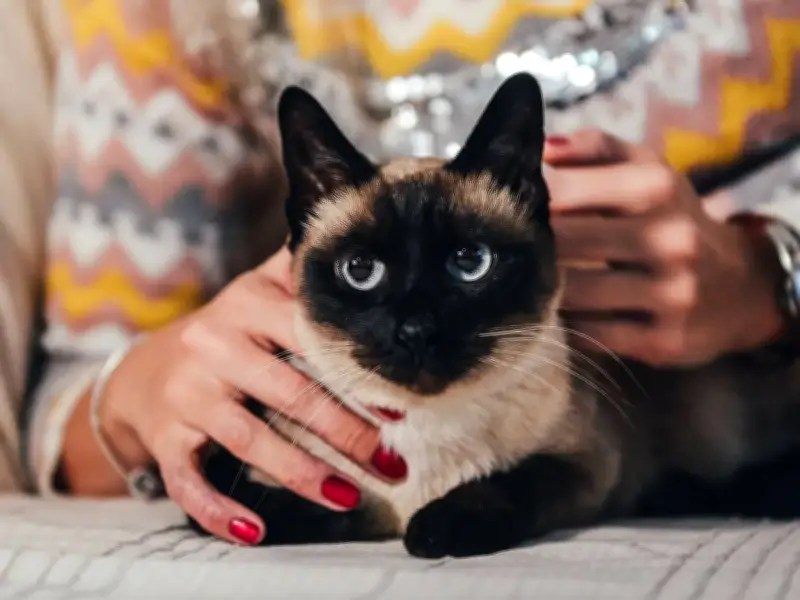
Some cat breeds are more prone to separation anxiety and may struggle when left alone for long periods. According to Cats Protection: "In both cats and dogs, separation-related behaviours can be linked to when a particular member of the household leaves, even if other people are still around. So, even if you leave your cat with someone at home, you may still notice changes in their behaviour."
Signs of separation anxiety in cats
Indicators can include agitation, persistent meowing, becoming unusually jumpy at loud sounds or disruptions, declining food, concealing themselves more frequently, urinating or defecating outside their litter tray, over-scratching furniture, and, in severe instances, vomiting or diarrhoea.
Breeds more susceptible to distress
Below are seven cat breeds that could be more susceptible to distress when left unaccompanied.
British Shorthair
While the British Shorthair may not rank amongst the most affectionate of felines, they nevertheless value time spent with their owners and can develop separation anxiety when left unaccompanied. Although this breed typically manages reasonably well with periods of solitude, excessive time without human interaction can trigger stress.
Bengal
Bengal cats have high energy levels, intelligence, and inquisitiveness, requiring substantial mental and physical engagement to maintain their wellbeing. Consequently, they may find extended periods of isolation challenging. Bengal owners should ideally be prepared to devote considerable attention to this breed.
Siamese
Siamese cats are notably affectionate, sociable, and human-focused, yet they can experience difficulties with separation anxiety when left alone. Research published in PLOS One identified Siamese cats as amongst the breeds most susceptible to separation-related issues.
Burmese
Burmese cats are lively and clever, with many displaying enthusiasm for games such as fetch. Similar to their Siamese counterparts, they establish deep connections with their humans and can struggle with separation anxiety during prolonged absences.
Persian
"Gentle, calm, and affectionate," Persian cats frequently develop strong attachments to their families, though they may be reserved around unfamiliar people. When left alone too frequently, some may experience anxiety or insecurity and require the comfort and presence of their owners.
Sphynx
The Sphynx is an energetic, lively, and mischievous breed that flourishes with attention, companionship, and substantial enrichment. When regularly left alone for extended periods, they may experience distress, boredom, and engage in destructive behaviour.
Ocicats
Ocicats are somewhat mischievous in nature. They frequently develop an especially close attachment to one particular family member. As they require considerable social interaction, prolonged periods of isolation can lead to distress. They're most suitable for an active, engaging household where they can receive abundant attention.