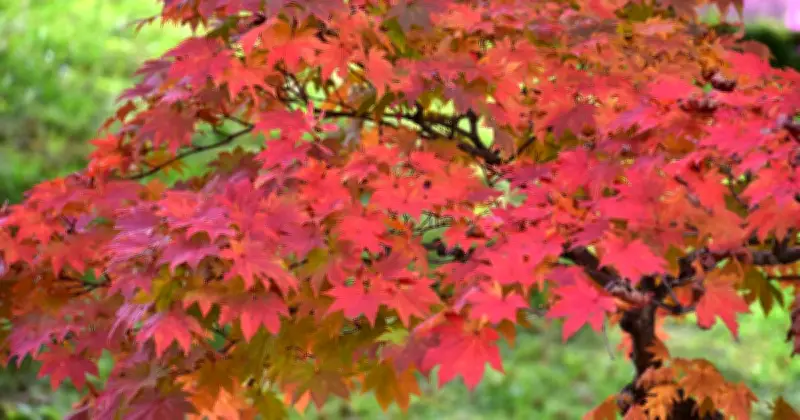
Japanese maples should receive their second and final feed of the year in September, a vital step that will carry them through until next spring, according to gardening expert and TikTok creator Ish.
In a recent video for Cherry Lane Garden Centres, Ish shared the important jobs gardeners should be carrying out this month. He said: “Acers only need two feeds a year, one in March and one in September.”
How to care for Japanese maples in autumn
It doesn’t matter if the Japanese Acer is planted in a pot or in the ground; either would benefit from a few care steps in autumn. This will help prepare the plant for the cold winter ahead, but also give it a good kickstart for the rest of the year and spring next year.

Gardeners should be focusing on maintenance as the weather begins to turn and get cooler and wetter. September is the best time to give Japanese maples a feed, the second and last one of the year.
Choosing the right feed
Ish explained that Japanese maples only need two feeds a year; the first should be done in March, while September is the best time for a second feed. He said: “Now is the best time to do the final feed of the year.”
Gardeners should choose a slow-release feed that can provide vital nutrients for the plant. All they need to do is simply place the feed directly on top of the soil around the base of the plant, then follow with a generous amount of water to allow the feed to sink into the soil.
Previously, Ish explained why slow-releasing feeds are so good for Japanese maples. He said: “Now a slow-releasing acer feed is high in potassium and phosphorus as opposed to nitrogen, meaning it focuses all its energy right down here, in root development.”
Protecting roots for winter
The feed will help the roots become strong ready for the winter, and will carry them through until spring. To help protect the plant further - and keep it hydrated - gardeners should retain moisture. This can be done by adding a well-drenched mulch onto the surface, either with a multi-purpose compost or leaves.
“By having that mulch there, you’ll provide a slow release, organic matter,” he said. “But keep it protected from those cold winds.”
Avoid any quick-release feeds or liquid fertilisers, as these can scorch the delicate, shallow roots of Japanese maples. Rapid bursts of nitrogen cause fast, stretched, and weak tissue growth, while gradual feeding supports compact, balanced, and healthy foliage.