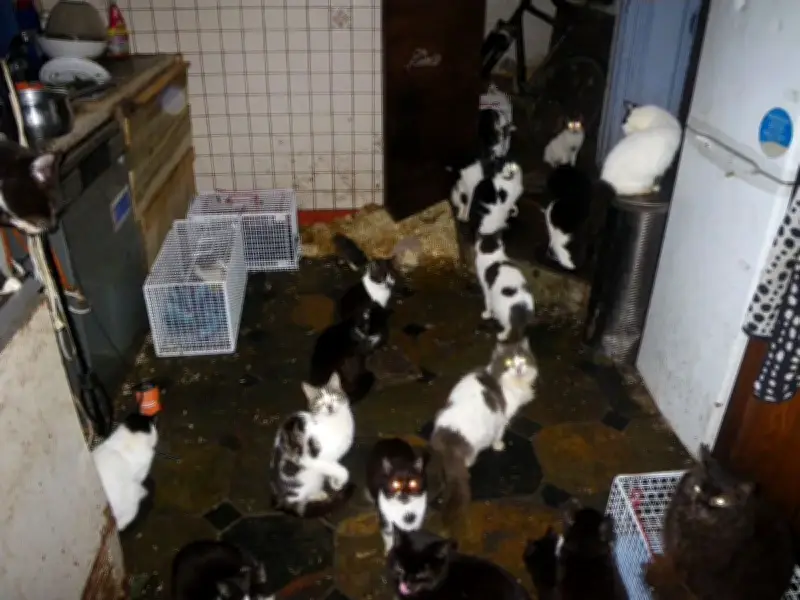
The RSPCA has said it is now taking in more cats than dogs for the first time ever, with a 67% increase in rescues involving multiple cats from the same house in just one year. One recent rescue saw 50 cats discovered in a single property, with photographs showing a filthy floor, smeared fridges and tiny cages.
The charity said it expects the total number of rescues this year to soar past the 10,000 recorded last year. It comes amid a 'cat crisis' brought on by irresponsible breeding and owners unable to afford their pets amid the cost of living crisis.
Multi-cat rescues soar by 67%
Beth Clements, RSPCA Assistant Director of Animal Services, said: "We’re seeing a huge influx and it’s having a big impact on our centres and branches - in June alone we took in more than 550 cats. For the first time ever we have more cats in our care than dogs."

"With cat-breeding season well underway, an increase in multi-cat incidents and adoptions slowing down over the summer months, there are simply more cats and kittens coming into our care than we have the space for," she added.
"We’re desperate for adopters and fosterers to come forward and help free up space in our centres, so we can help more cats rescued from cruelty and neglect - and we’re also urging people to make sure their cats are neutered. Cats can breed from as young as 16 weeks, so unneutered kittens can quickly see cat populations spiral."
Rise of 'XL Bully cats'
Last week, the Mirror reported on the rising number of 'XL Bully cats' appearing in British vets clinics and shelters after developing serious health complications, including painful arthritis and skin conditions. XL Bully cats are not a recognised breed but are clearly identifiable by their unusual, malformed appearance, created by mixing hairlessness in the Sphynx breed with the short legs of Munchkin cats.
The cats first appeared in the UK in 2024, with the troubling boom blamed on unlicensed social media breeders competing over the most 'extreme' look in the pets.
Madison from Cats Protection said: "Cats’ body shapes have remained broadly similar for hundreds of years, but in a relatively short space of time this has dramatically changed. There are people out there who are ultimately experimenting with animals, and really pushing the kind of moral and ethical boundaries of what is acceptable to create something 'different'."
Call for law change
"If action is not taken quickly, we are likely to see more alarming examples of what we are calling ‘Frankenstein’ cats - who bear no resemblance to our beloved moggy and, tragically, come with multiple health issues," Madison added.
The RSPCA and Cats Protection are backing a change in the law to ban the breeding of cats with known harmful traits, and ensure 'hobby breeders' who do not operate commercially are also required to have a licence.