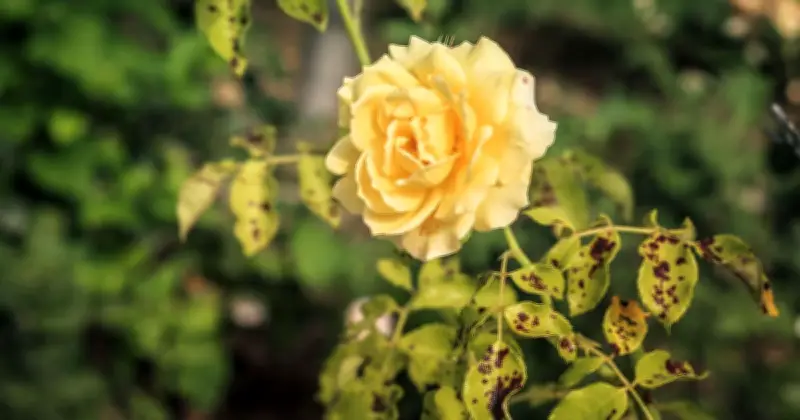
Roses can be protected from black spot, a serious fungal disease that spreads uncontrollably, with a simple five to ten-minute job in November, according to gardening expert William Mitchell of Sutton Manor Nursery.
As the garden settles into a quieter rhythm, November brings a second wave of rose blooms from reliable repeat bloomers. The cool weather and damp conditions make these flowers seem more plentiful and help them last longer, but close inspection is recommended.
Yellowing leaves with black spots scattered across them signal that action is needed. Keeping on top of pest and disease management is key to maintaining healthy, thriving roses.
What is black spot disease?
At this time of year, roses can be extremely susceptible to diseases. Black spot is one of the most dangerous diseases common in roses.
William said, “This is by far the most dangerous disease that a rose can get. The disease is caused by a fungus called Diplocarpon rosae. This fungus attacks the leaves and greatly reduces plant vigour.”
Black spot typically begins as dark spots on the leaves, black or deep brown, occasionally with a purplish hue. These spots feature a somewhat fuzzy border and frequently display a yellow halo surrounding them. They generally emerge on the lower leaves, those nearest to the ground where rain and water splash can transport fungal spores from the soil.
As time goes on, these spots expand, sometimes blending together into larger patches that cause the leaves to turn yellow. When this occurs, the leaves fall away, and the rose loses a significant portion of its leaf surface, which it requires to absorb sunlight and produce energy.
How to stop black spot disease
Prevention is the best cure, but when black spot does make an appearance, “clearing away these leaves that have been affected by black spots is vital”, instructed William.
He added, “This is because the diseases can spread uncontrollably and can even reinfect when the following spring comes along.” Removing the affected leaves and pruning out any infected stems should be a five to ten-minute job.
Keeping pruning shears and tools clean and disinfected is also important. A quick wipe down with alcohol or another good disinfectant prevents spreading fungal issues from one plant to the next.
Once the leaves have been removed, the gardening expert urges, “Dispose of these infected leaves as quickly as possible to make sure that the fungal disease does not spread throughout the garden.” The leaves should not be thrown into a compost heap, as that gives the fungus the opportunity to return to the plants next season. Instead, they should be bagged or added to green waste for disposal.