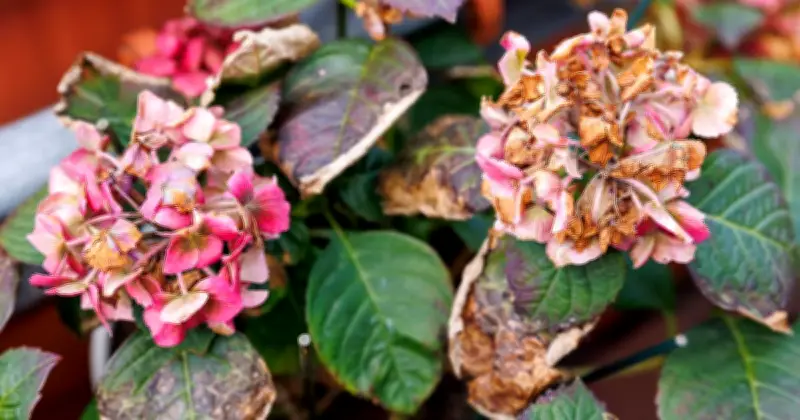
Hydrangeas that are drooping and crispy at the end of summer can be revived with a simple task: watering the soil directly at the base of the plant. The recent hot weather and heatwaves may have negatively affected the plant's vitality, as hydrangeas are not drought-resistant, leading to dry, crispy and drooping leaves.
Why hydrangeas droop
Gardening expert and TikTok creator Ish explained that the answer comes down to the hydrangea's water and moisture content, and gardeners should focus on rehydration. Ish wrote in a video caption: "If your hydrangea is looking a little sad and droopy then chances are it’s having some issues. The most common at this time of year is that it’s not got enough water. By rehydrating your plants you should be able to help them come back."
In the video, Ish said: "If your hydrangea is looking a little on the sad and droopy side, you may think it’s too far gone, but actually it will recover." If the hydrangea is showing green leaves with a touch of yellow while being very droopy, it is likely not getting enough water. Ish urged gardeners to resist pouring water over the top of the plants. Instead, pour the water directly onto the soil at the base, so it can get down to the roots. He said: "It will soon take care of itself, but you need that moisture to be in the ground."

Feeding and testing hydrangeas
Hydrangeas risk going droopy if they are planted in a very sunny spot, which can lead to scorched leaves. Rehydrating is still the best remedy to keep the plant healthy. Once the hydrangeas have been well watered, gardeners can think about feeding them. Ish said: "In terms of feed, what I do is I give it a good water for a week or so. When you start to see signs of recovery or new buds, that’s when you can introduce in just a multipurpose feed or a slow release feed like bloodfish or bone, just to help it recover a little bit."
He added: "After a few weeks some of these leaves may drop off, but you will get new buds. And they should look as good as new. So don’t worry too much about throwing this out, chances are it’s perfectly fine." If unsure about the issue, Ish recommended doing a "scratch test" at the bottom of the stem. Scratch off a small bit of bark, and if it is green underneath, the plant is still healthy. If brown is underneath, the plant is too far gone to fix.
Long-term fixes for hydrangeas
For hydrangeas planted in areas with too much sunlight and poor soil, Barbara Fair, a certified arborist and associate professor and Landscape Extension Specialist at North Carolina State University, told Martha Stewart that adding raked leaves to the soil is the best solution. Composted leaves keep the soil well-drained and help retain moisture and essential nutrients as they decay. Fair said: "They need moist well-drained soils. For hydrangeas, the best soil is composted leaves."
To prevent drooping in the future, gardeners should irrigate through autumn and winter. Even though the flowers will be dormant, the roots still need moisture to stay healthy. Gardeners should also consider moving hydrangeas to a shadier area. Brooke Edmunds, professor of practice and horticulturist at Oregon State University Extension, told Martha Stewart: "If the plant is receiving too much sun, then make a note to transplant it to a shadier spot during the dormant season."