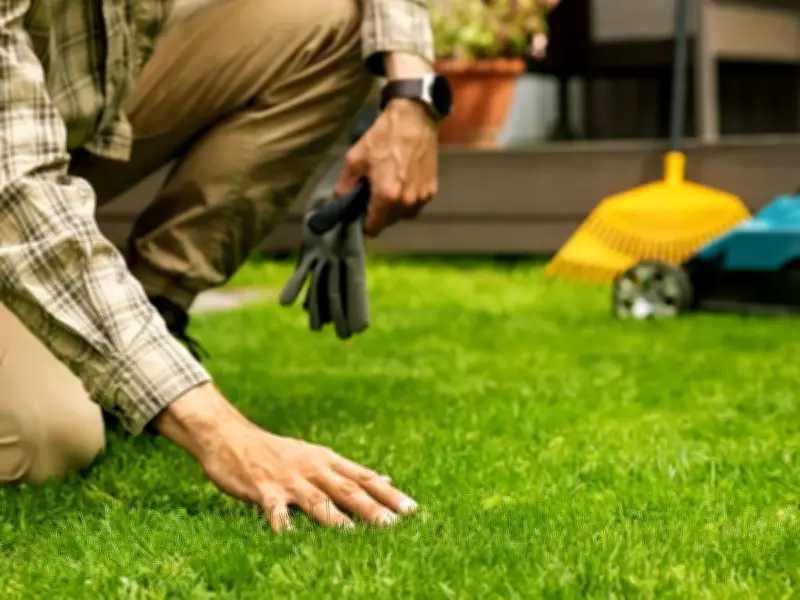
As temperatures finally cool off in the UK after weeks of hot and dry weather, gardeners can revitalise scorched brown lawns and grass quickly in three simple steps.
Over recent months, the UK has experienced successive heatwaves, with numerous areas across the country recording unprecedented temperatures. Additionally, more than two-thirds of England and the entirety of Wales have now officially been placed under drought conditions.
Due to the blistering heat and prolonged dry spell, gardens and lawns nationwide have borne the brunt of these harsh environmental conditions. Meticulously maintained verdant lawns have transformed into yellowy-brown and lifeless patches.

However, as temperatures begin to drop following weeks of persistent heat, isolated areas of the UK are at last witnessing the initial signs of rainfall. While the sound of rain falling on your parched brown lawn might seem like reason to rejoice, it could still require considerable time for your garden to regain its previous splendour.
Indeed, it's crucial not to immediately worry, despair, or grab fertiliser in an attempt to restore lawns and gardens to their earlier lush and vibrant state, reports the Express.
Don't Panic: Dormancy vs Death
DIY Garden explains: "Depending on your grass type and the severity of the drought, much of that brown lawn may be dormant rather than dead. Dormancy is a survival mechanism that allows established turfgrass to conserve resources during prolonged heat and water stress."
Matt J Adams, founder and lead gardener at The Relentless Gardener, says: "Don't panic if your lawn has turned brown after a heatwave. As temperatures return to normal and rainfall increases, most lawns will begin to recover naturally. Avoid using high-nitrogen fertilisers on stressed grass, as these can do more harm than good. Patience is key. With the right care, most lawns will bounce back within a few weeks."
Resume Mowing Gradually
The manner in which you mow your lawn following a heatwave as rainfall returns is critically important. Peter Chaloner, Managing Director of Cobra Garden, explains: "Brown patches, slower growth and dry, compacted soil are all common after a heatwave, but most lawns will bounce back with the right care.
"Be gentle and resume mowing gradually rather than shocking the lawn with a heavy cut, keeping the blades set a little higher to avoid putting unnecessary stress on recovering grass. As growth returns, regular mowing at this raised height will encourage the lawn to thicken up while allowing the grass to rebuild its strength."
Water Smarter, Not Harder
Matt advises: "Water smarter, not harder. A thorough soak every few days is much more beneficial than a light sprinkle every evening. Deep watering encourages the roots to grow further into the soil, making the lawn better equipped to cope with the next dry spell."
The expert gardener advises watering gardens and lawns during the early morning hours or late evening, which helps prevent scorching the turf and reduces moisture loss through evaporation.
Peter offers comparable guidance: "Continue to water deeply but less frequently while the lawn recovers, encouraging roots to grow further into the soil where moisture is available for longer. If some areas are still brown, don't be too quick to replace them. Grass often enters a dormant state during prolonged heat and, given time and the right conditions, many lawns will recover naturally over the coming weeks."
Apply a Gentle Feed and Liquid Seaweed
Matt explains: "Give your lawn a fresh start once the weather cools. When temperatures return to normal, if there are any thin or bare patches, lightly rake out dead material before overseeding to help the new grass seed (especially if it's shaded grass seed) make contact with the soil to encourage germination. Keep the area consistently moist until the new grass is established."
He adds that once gardeners observe their lawn has resumed active growth, a gentle, drought-friendly feed should be administered. This helps restore depleted nutrients and stimulates fresh green development.

Matt emphasises it's crucial to "feed to replace what the lawn has lost". Given that heat and prolonged dry spells tend to strip lawns of vital nutrients, it's essential that once the most severe hot weather subsides and rainfall resumes, a high-quality slow-Nitrogen-releasing lawn fertiliser be used so that critical nutrients can be restored and vibrant, healthy growth can be promoted.
"Always follow the application instructions and avoid feeding if the soil is still extremely dry," Matt adds.
He added: "Use liquid seaweed to reduce stress and aid recovery. Seaweed helps condition the soil, encourages stronger root growth, improves nutrient uptake and reduces stress caused by hot, dry weather."
The gardening specialist suggests routine applications of liquid seaweed as they can help protect lawns for the future by "supporting a healthier root system and improving the grass's ability to retain moisture".
Matt shares: "Healthier, greener grass is naturally more resilient to heat stress, stays greener for longer during dry spells and recovers more quickly once temperatures return to normal."
Peter highlights that it's vital to implement 'drought-resistant mowing practices', as they can enable lawns to withstand 'future periods of extreme weather' more effectively.
Peter advises: "Using a mulching mower is a simple but effective way to improve moisture retention, as the finely chopped grass clippings are returned to the lawn, helping the soil hold onto moisture to make it stronger for any future heatwaves."