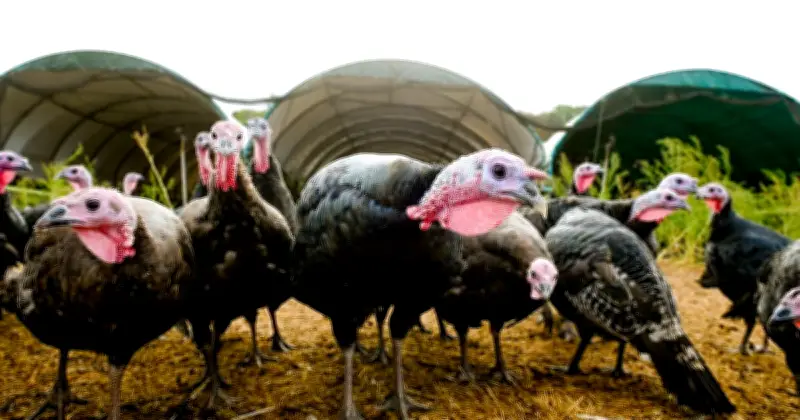
Copas Farm in Cookham, Berkshire, has turned to an unusual security team to protect its free-range turkeys: a squad of around 10 retired, castrated male alpacas. Fourth-generation farmer Tom Copas says the animals act as a "hit squad" against foxes, which he describes as a constant threat to the business.
The Copas family has farmed in Maidenhead since 1901, moving into turkeys in 1957 when Tom's father, Tom Copas Snr, was gifted 153 birds as a teenager. More than a decade ago, shortly after moving six- to seven-week-old turkeys out onto the fields, the farm suffered heavy losses when foxes repeatedly breached the pens, killing around 360 birds in a matter of days.
Why foxes are a major threat
Tom told the Express that foxes kill "for pleasure" and that turkeys are easily spooked, often smothering each other when frightened. "If they're scared of something, they will tend to jump on each other. They smother each other and can suffocate each other," he said.
After traditional fencing failed and staff could not patrol the fields around the clock, a colleague suggested using alpacas' natural guarding instincts. Tom learned that older, castrated males make the best protectors. "Castrated old men are what you need, generally. The older the better, more cranky, as it were," he said.
Deploying the alpaca squad
Tom rehomed two older alpacas named Sage and Onion, which initially faced a tense arrival. "It was a bit like a Mexican standoff," he joked. Within a week, the alpacas had camped out in the corner of the paddock where foxes had been entering, and attacks dropped.
The farm now maintains a rotating team of retired alpacas, split into groups of two or three during the season and deployed wherever fox activity flares. Tom said they have been seen charging after foxes and attempting to trample them. "It's not a foolproof solution, but it's another item in the armoury," he added.
Bird flu housing measures
Copas Farm's flock has now been moved inside polytunnels after Defra and the Animal and Plant Health Agency (APHA) expanded England's Avian Influenza Prevention Zone to include mandatory housing measures, effective from 12.01am on November 13. There is no bird flu at Copas Farm, and Tom welcomed the order as a sensible step, noting nine commercial and captive poultry outbreaks have been recorded this autumn, plus a recent case under investigation in County Tyrone, Northern Ireland, where over 20,000 birds are scheduled to be culled.
Tom expressed optimism about ongoing UK turkey vaccine trials, hoping a vaccine could be in place by 2027 to protect poultry farms from culls and cheap foreign imports.
Christmas demand and cooking advice
Despite industry figures showing primary turkey sales down 12% year-on-year, Tom said his customers remain loyal, with around 80% returning each year and some families ordering for over 40 years. He advises home cooks to season the turkey with salt, roast at 180C, and pull it from the oven when the thickest part of the breast reaches 68C, then rest for up to an hour. Copas Farm turkeys start from £63 for breast roasts and £114 for whole birds, with orders by December 16 for delivery on December 22 or farm collection on December 22–23.