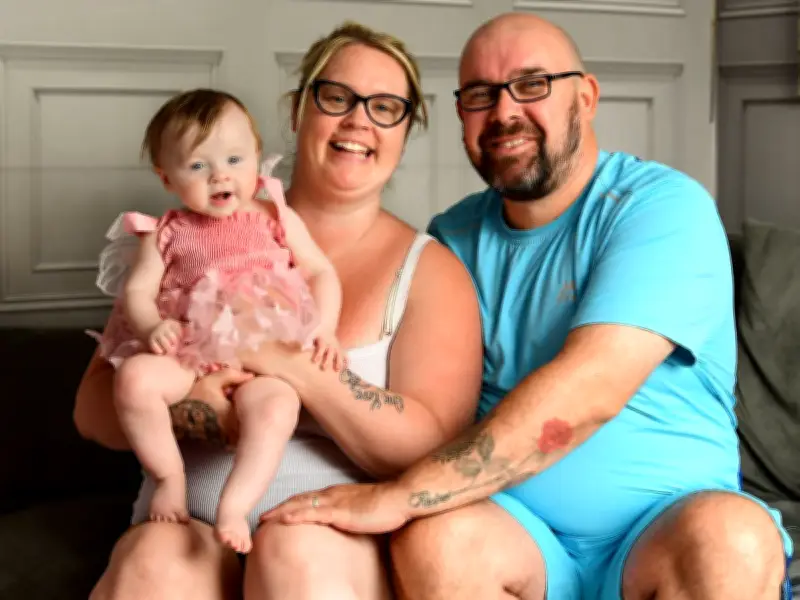
Lee and Rachel Jenkinson, from Pensby, were overjoyed when, after five boys, they finally welcomed a baby girl, Willow, into the family. Initially, Willow seemed healthy, but by six months she was not sitting up or eating solid foods.
Diagnosis of a Rare Condition
Lee, 45, said: 'We noticed she wasn't hitting her milestones. She wasn't sitting up, she was stiff, and when it came to start weaning her onto food, we couldn't get her to eat anything.' A health visitor referred them to specialists, and a paediatrician recommended genetic testing at Arrowe Park Hospital.
In June, the family learned Willow had Angelman syndrome, a rare genetic condition affecting the nervous system. According to the NHS, it causes severe physical and learning disabilities, including difficulties walking and talking. The condition is caused by the loss of the UBE3A gene during conception.
Impact on the Family
Lee said: 'I had never heard of it. Even the paediatrician didn't know about it; she said it was very rare.' The diagnosis was difficult to process. Willow will likely be non-verbal and may not walk without assistance. Epilepsy is also a risk.
The family of eight is currently house-hunting through Property Pool Plus and needs an accessible home for Willow's future needs. Lee added: 'It's very stressful. We're just trying to see if we can find somewhere.'
Hope and Fundraising
Despite the challenges, Lee remains hopeful after joining an Angelman support group: 'A lot have been told their children won't walk and they have managed to walk with help, with equipment.' The family has set up a GoFundMe campaign to raise £1,600 for mobility and daily living aids not covered by the NHS.
Willow is described as a happy and loving child. Lee noted: 'When she was born, one of the midwives mentioned something about her eyes, but the doctor said she was fine. It was only after her diagnosis that we found out her appearance could be linked to the syndrome.'