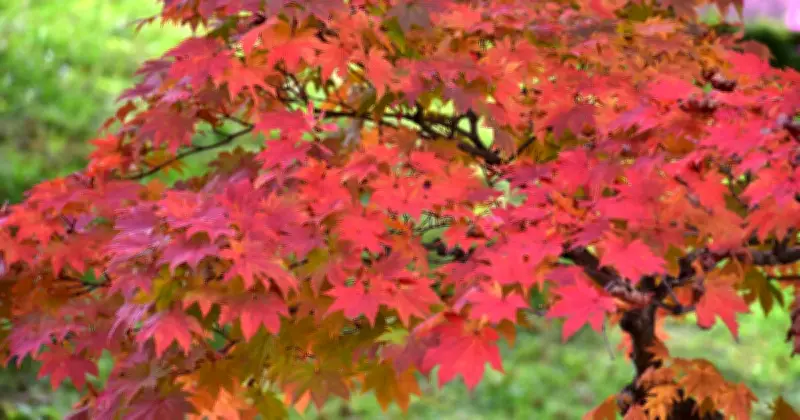
Gardening experts have urged Japanese maple owners to inspect their trees after leaf fall and prune out any dead or damaged wood, a task that helps keep the plants healthy through winter and ready to regrow in spring.
Japanese maples, also known as Japanese acers, put on a display of red leaves during the growing season, but as winter approaches the foliage changes colour and much of it drops. While most garden plants need little or no maintenance in the colder months, the run-up to winter is the time to prepare for the following spring, according to advice shared by the Royal Horticultural Society (RHS).
Why prune acers in November
Winter is a good time to prune these plants because the individual branches are visible once the leaves have fallen, making it easier to spot dead or damaged growth that needs removing. Pruning now also avoids the risk of the plant "bleeding" sap, which can happen if the work is left until after the end of December, according to Jackson's Nurseries.
To identify dead stems and branches, gardeners should look for wood that appears greyer than the usual dark reddish-brown colour of the acer. These dead sections can be cut as close to the base of the stem as possible, so the plant does not waste energy on them.
Protecting against infection and leaf scorch
Overlapping or rubbing branches should also be cut back, as branches that are too close together can increase the risk of infections. Pruning helps keep the leaves strong, since cold weather can damage them, and in some cases leaf scorch can lead to premature leaf drop and even dieback of small branches.
The RHS noted that extra care should be taken during late winter and early spring, when cold winds and potential frost can scorch the leaves. When trimming, gardeners should aim to remove just the dead, damaged and overlapping branches.
Normal autumn changes and winter care
Gardening expert Ish Kamran explained that losing leaves and seeing the vibrant red colour turn brown and crispy is completely normal for acers, which are deciduous plants. In winter the sap returns to the roots, meaning the tree can be pruned to any shape without causing damage.
Kamran said: "If you don't know, acers are deciduous plants. So what happens in the winter, they do lose their leaves, and all of that natural sap that's in here goes all the way down back into the roots, which is great for us because it means that in the next couple of months or so, I can actually prune this to any shape that I really fancy and it won't do any damage."
The plants will not need feeding yet, as they are entering their dormant period, but if the soil is drier than expected, gardeners can give the tree a good watering before leaving it alone for the winter. Kamran advised that new shoots should appear around March or April, which is the time to apply an acer feed, and that pale grey stems can be pruned away at any point in the year since they are dead.