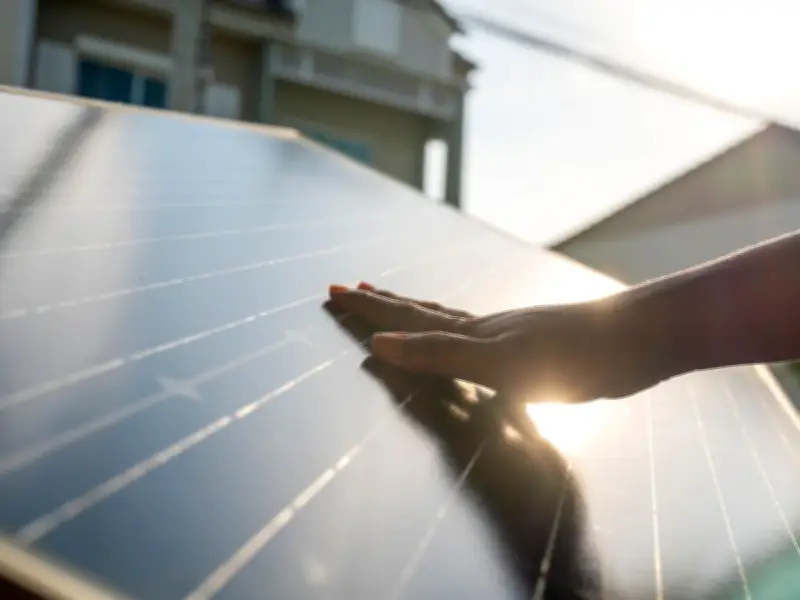
Households across Great Britain will be able to legally purchase plug-in solar panels from August 27 as the Government removed a key barrier preventing these products from being sold by high street retailers. Unlike traditional solar panels, this plug-in version does not need to be installed on the roof.
How plug-in solar panels work
Known as ‘balcony power plants’ in Europe, these panels can generate electricity from any outdoor space including balconies, terraces or shed roofs. They do not require professional installation, making them more renter-friendly. The Government estimates that making this switch could save some households up to £110 a year on electricity bills.
Plug-in solar panels are widely used in parts of Europe and usually include one or two small solar panels and a microinverter to convert the electricity into a safe form that can be fed into the home via a three-pin socket. Feeding electricity backwards into wall sockets previously violated UK wiring and safety rules, making the products illegal. The Government is rewriting this legislation, and households will be able to legally use them from August 27.
Considerations and costs
Households will still need to consider local planning rules, check their home’s electrical system is compatible, and get permission from landlords or freeholders before installing the panels. The legal change will allow mainstream retailers like Currys, B&Q and Asda to sell DIY solar setups to people living in flats or rented homes without rooftop access.
According to the Guardian, Government guidelines discussed with retailers earlier this year anticipate the plug-in panels to be priced at around £400 or more. The small systems do not have the same capacity as larger counterparts, so it is not possible to power an entire home on the ‘balcony power plant’ alone. However, it can reduce bills, with the Government estimating £70 to £110 annual savings.
Legal specifications
Households should also be aware that not every plug-in solar panel kit will be automatically legal. Products must comply with new product specifications and safety rules. According to the Independent, the legal devices will have a maximum output of 800W, with only one device allowed per electrical circuit. The legal exemption covers only solar generation devices, not other plug-in devices that draw electricity from the home and store it to feed back later.