
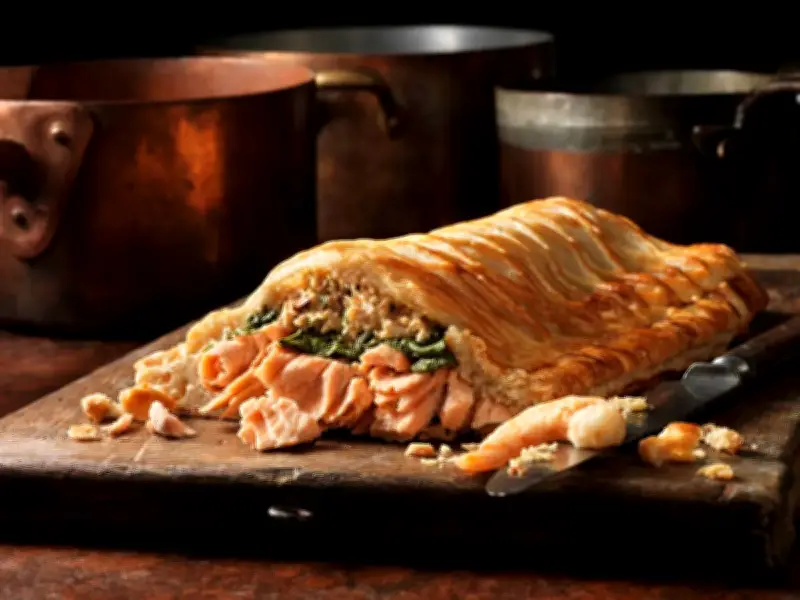
Salmon can be a versatile protein for any meal, but keeping it from drying out can be a challenge. A key step, curing the fish overnight, is recommended by chefs to lock in moisture and flavour.
Why Curing Salmon Matters
UK chef Angela Hartnett recently featured a salmon en croûte recipe by former Great British Bake Off contestant Martha Collison on the Dish from Waitrose podcast. The dish, prepared for co-host Nick Grimshaw and guest Reece Shearsmith, highlights a common problem: the fish can overcook while the pastry stays underdone.
The advice is clear: "Don't skip the cure! Curing the fish overnight with sea salt, soft light brown sugar and unwaxed lemon zest lightly seasons the fish and helps to tighten the flesh." If time is short, a minimum of six hours will work. After curing, the fillets need a brief rinse and should be patted dry.
How Curing Works
Curing draws moisture out of the salmon, transforming the raw, loose flesh into a dense, silky, and firm texture. This process results in a satisfyingly moist texture when eaten and enhances the fish's overall flavour.
The Dish video has gained over 64,400 views, 4,287 likes, and 22 comments. Martha herself responded: "One of my best recipes! Thanks for making it." Other viewers commented, "This looks amazing," and "Bloody love salmon en croute."
Martha Collison's Salmon en Croûte Recipe
To recreate the dish at home, the following ingredients and method are used.
For the cure: 25g sea salt flakes, 20g soft light brown sugar, zest of one unwaxed lemon, and two 500g packs of salmon fillet (look for pieces that are the same size).
For the filling: one garlic clove, 25g coriander, 25g pack flat-leaf parsley, two preserved lemons, ¼ tsp ground cumin, 50ml olive oil, ½ tsp chilli flakes (optional), 80g pack spinach, ½ x 250g mascarpone, and ½ lemon juice with extra wedges to serve (optional).
For the pastry: plain flour for rolling, 500g block puff pastry, and one medium egg, beaten.
Prepare the cure the day before by combining the salt, sugar and lemon zest in a small bowl. Remove the skin from the salmon fillets, check for small bones and remove them. Place the salmon in a shallow bowl, rub both pieces with the cure, cover with baking parchment or foil, weigh down with cans, and chill for at least six hours, ideally overnight.
Put the garlic in a spice grinder, mini chopper or pestle and mortar. Tear the coriander and parsley, removing thick stems, and blend until finely chopped. Remove and discard the seeds from the preserved lemons, add what's left to the mixture with the cumin, olive oil and chilli flakes, and blitz again. Tip into a mixing bowl, finely chop the spinach, and add to the herby paste with the mascarpone and lemon juice. Stir well and set aside.
Remove the salmon from the fridge, drain the liquid, rinse well to remove the cure, and pat dry with kitchen paper. Line a baking tray with baking parchment. Lightly flour the work surface, cut off a portion of the pastry, and roll it into a rectangle about 35 x 28 cm. Position one salmon fillet in the centre, add the filling on top, and place the second fillet on top, aligning the thinner end with the thickest section of the bottom layer to form an evenly-shaped block.
Brush the pastry edges with beaten egg, fold the long sides around the fish, pinch underneath to form a seam, and fold the short ends up to create a parcel. Turn over, place onto the lined tray, and use the remaining pastry to create a lattice. Brush the top with egg, stretch the lattice to cover the surface, brush again with egg, and chill until firm. When ready to cook, preheat the oven to 200ºC, gas mark 6, and bake for 35-40 minutes until golden brown and cooked through. Allow to rest for five minutes, then slice and serve.




