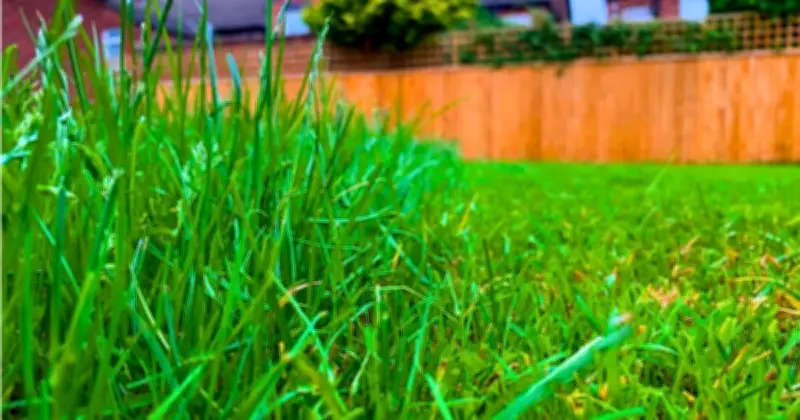
Why aeration is the answer
Aeration involves poking holes into the lawn to relieve soil compaction, allowing air, nutrients and water to get to the roots more easily. Healthier roots help the lawn hold more water, resist drying out and store energy for regrowth. It also improves conditions for seeding, so grass thickens and turns green more quickly, giving you the best possible lawn by autumn. Aerating now speeds up recovery and can help prevent weeds, moss and pests from taking over.Theron Peck, a gardening expert from Chippers Inc, explained the problem. He said: “Soil compaction is an extremely common problem found in lawns yet no one realises the effect it has on weakening your lawn to the point of thinning it out into visible bare patches. Add over-seeding with aeration to improve your lawn’s overall appearance and regain lost or thinning turf.”
How to aerate a lawn
Aerating is straightforward: a pitchfork is all you need, though a lawn aerator may be worth buying for a very large garden. The best time to do it is the day after rain, when the ground is soft but not soggy or waterlogged, as excess water can stress the grass.Mow the lawn first to clear debris, then start poking holes into the soil. Push the fork in about 10 centimetres deep and rock it gently backwards and forwards to open up the soil. Repeat the process across the whole lawn, then water and seed it afterwards. With this care, the lawn should become more resilient and can turn emerald green by the time September begins.