
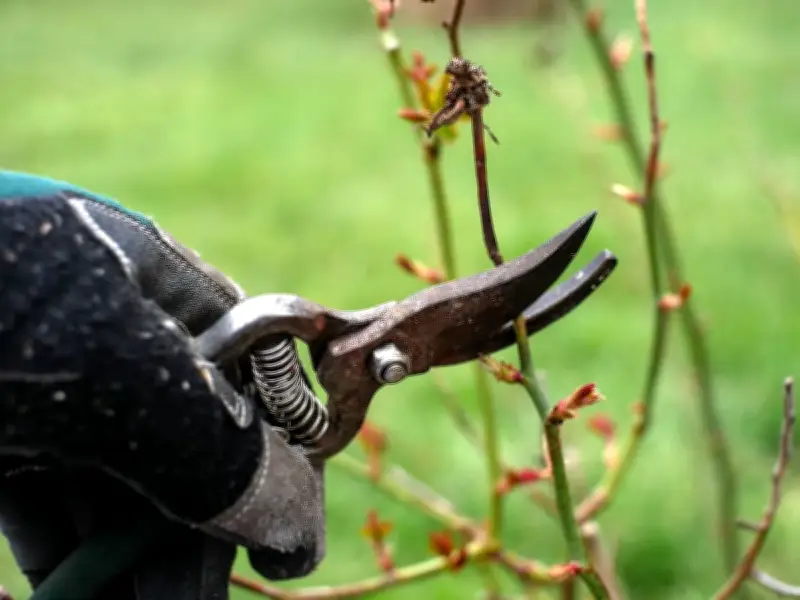
October is a busy month in the pruning calendar, offering gardeners the chance to prepare plants and shrubs for the months ahead. Many plants that helped create a beautiful summer garden need pruning now to return and flourish next year.
According to the Royal Horticultural Society (RHS), there is plenty to do, including cutting back deciduous hedges and pruning roses. Tender plants such as lavender and rosemary can also benefit from a trim, as they will not survive a winter prune.
Climbing roses and shrubs
Gardening expert Monty Don wrote in an October blog post: "Prune climbing roses. Climbing roses flower on shoots grown in the same spring, so they can be pruned hard now." He advised removing damaged or crossing growth and any very old wood, which can be pruned right back to the ground. Main stems should be fanned out horizontally and tied to wires or a trellis, with side shoots reduced to a short stub or a couple of leaves. Ensuring everything is securely tied helps prevent winter damage, and pruning now allows climbing roses to deliver "maximum" blooms. Rambling roses can also be cut back.
Shrubs such as Buddleja davidii are typically pruned hard in spring, but the RHS says gardeners can cut them back by half now to tidy their appearance and protect against wind rock. Cornus alba and Lavatera can also be cut back by half at this stage, and again in spring, though over-pruning should be avoided as it may make them unstable.
Vines, lavender and ornamental trees
The experts at Crocus said: "Boston ivy and Virginia creeper will need new shoots tying into their supports for the first couple of growing seasons after planting." Once established, they can be pruned anytime from now until Christmas to keep them within bounds, paying attention to stems encroaching on windows, gutters or roofs. Old and neglected plants respond well to severe pruning and can be cut back to plump buds about 1m from the ground.
French, Spanish and Italian lavender should be left until spring, but English lavender can be pruned now. Deadhead spent blooms and trim fresh green growth to promote a compact form and prevent woody stems, while avoiding cutting into old, bare wood as lavender does not regenerate from mature wood. Ornamental trees such as acers and sorbus should be pruned between October and November once their leaves have dropped.
Hedges and fruit trees
October represents the "last chance" to trim deciduous hedges and keep them neat through winter, according to the RHS. They said: "Once a hedge has reached a height and width you are happy with, maintain it with regular trimming to remove nearly all young growth." While pruning may need to be held off to avoid disturbing nesting birds, October is an ideal time to cut back hornbeam, hawthorn and beech hedges.
Pruning fruit trees now helps improve their shape and overall yield. Remove all dead and diseased wood, and thin out branches to improve air circulation and allow greater sunlight penetration, both of which encourage healthy growth.
Full list of what to prune in October: climbing roses, rambling roses, Buddleja davidii, Cornus alba, Lavatera, Boston ivy, Virginia creeper, English lavender, Japanese maple, hornbeam, hawthorn, beech hedges and fruit trees.




