
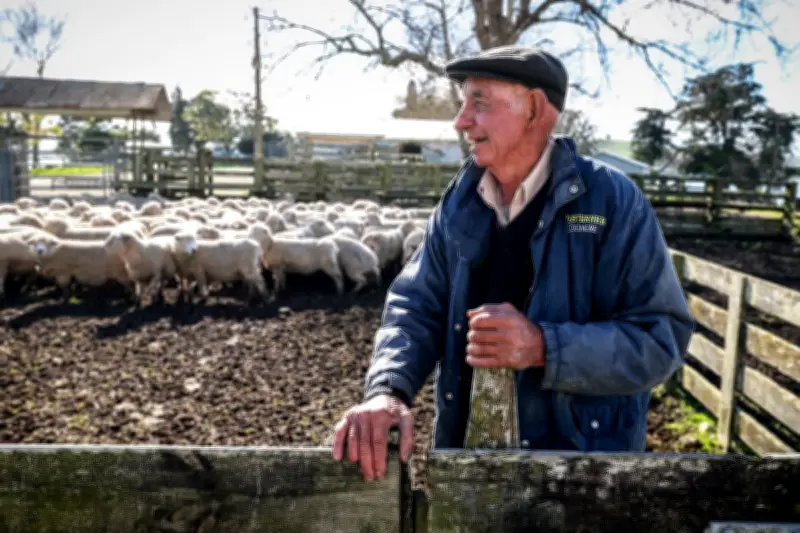
After decades of decline, New Zealand's wool industry is showing signs of a comeback, with farmers like John Hargreaves seeing profits for the first time in about six years. The resurgence is driven by rising costs of synthetic fabrics and increasing global demand for natural fibres.
From peak to decline
Forty years ago, there were more than 22 sheep for every New Zealander, with the national flock peaking at over 70 million in the 1980s. However, wool prices and production fell as synthetic alternatives gained popularity. Economic policy changes in the 1980s and a drop in global demand led many farmers to convert pasture to forestry or dairy farming. Today, there are just over 23 million sheep, or 4.5 per person, according to StatsNZ.
John Hargreaves' family has farmed sheep and beef in Kaiwaka, north of Auckland, for generations. In the 1960s, they had 3,000 ewes, but as wool value declined and shearing costs grew, the flock decreased to just over 1,700. Now, for the first time in roughly six years, his wool is making money.
Drivers of recovery
Dave Burridge, national wool auction manager for PGG Wrightson, says tight global supply and rising oil prices driven by the Middle East conflict are pushing up demand for wool. "The raw material used to produce nylon and polyester fibres, they've all gone up in price," he says, pushing buyers from countries like China and India towards natural fibres.
Major global brands are also seeking out New Zealand wool. In April, French luxury brand Chanel invested in Central Otago's Lammermoor Station to support premium wool production. American outdoor clothing company Patagonia visited New Zealand in June to explore wool partnerships, and in May, Turkish carpet manufacturer Kalida Hali struck a deal with Wools of New Zealand.
Record prices and market volatility
In June, the country's wool fetched its highest prices in 15 years at the PGG Wrightson national auction, ranging from NZ$6.47 to NZ$6.80 per kilogram for crossbred fleeces, with top-quality fleeces reaching nearly $8 per kilogram. However, prices dipped at the most recent auction in Christchurch on 30 July, partly due to buyers stepping back after filling commitments earlier in the season.
Burridge notes there was "always quiet concern by wool industry players that the price had gone up very quickly, like unparalleled rises that we'd never seen before, and … that things were going to probably come off at some stage." Despite the dip, prices are still up $2 on a year ago, and he remains optimistic: "I feel really excited about the long-term prospects for wool, and convinced that wool will have its day in the sun again."
Future outlook and cultural re-embrace
Richard Dawkins, Federated Farmers' wool and meat manager, says strong wool prices have buoyed farmers, with cautious optimism for the future. He highlights "continued awareness globally of sustainability and the attributes of wool" as a positive outlook.
Demand for New Zealand's high-quality wool is also increasing in India, the country's second-largest wool market. A recent trade deal between the two countries will eliminate tariffs on wool, expected to strengthen exports.
Dawkins calls for New Zealand's culture to re-embrace wool to bring stability to the market. "This nation was built off the back of a sheep, built off wool … and that story's been lost over the decades. It's one thing asking the world to buy our product, but we need to embrace it ourselves as well."




