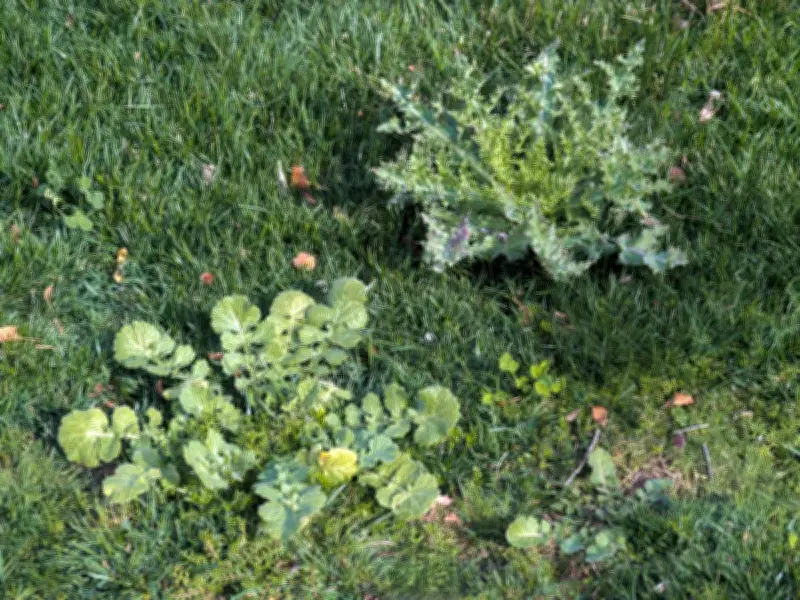
As the season moves towards autumn, gardeners are bracing for a rise in lawn weeds, which typically thrive at this time of year. These unwanted plants come with different life cycles — annual, biennial, or perennial — and can become very hard to control once they take hold in the grass.
While chemical treatments are available, Peter Chaloner, gardening expert and managing director of Cobra, recommends a natural and "effective way" to get rid of them. Weeds, often seen as unwanted plants, can grow almost anywhere and are not always unattractive; some may even look like familiar wildflowers. Still, for anyone aiming for a pristine lawn, quick removal is key.
Why vinegar and chemicals can backfire
Peter advised: "Removing weeds is the first step in achieving the perfect lawn. Avoid using chemicals, boiling water and white vinegar that are rumoured to work as you run the risk of killing the surrounding grass and doing more harm than good."

Instead, he favours a hands-on method: "The more effective way is to dig simply. Take a hand trowel, or even a specialised weeding trowel, and dig around the weed, but be sure to get deep under the root to make sure it is entirely removed."
This digging approach works especially well against stubborn weeds like dandelions, broad-leaved docks, and plantain, which have long taproots. Simply pulling off the leaves is not enough; the whole root system must be taken out to prevent regrowth.
Stopping weeds from coming back
Some weeds are highly invasive and can regrow from tiny root fragments, quickly spreading through extensive rhizome networks. After dealing with the weeds, it is important to stop them returning with a full lawn care routine.
Peter recommends starting with scarification to clear debris and dead grass that restrict airflow to the roots, then moving on to aeration to improve circulation. Regular scarifying keeps annual weeds down and can also reduce perennial types. Thatch and moss rob grass of nutrients and moisture, but a scarifier can remove that build-up and trim the grass.
For lawns with thistle or common ragwort, frequent mowing can help keep them in check. Peter suggested: "Mow throughout spring and summer little and often, and don't take too much off with the first cut so as not to shock the grass."
Before mowing, make sure the lawnmower has a clippings bag or box attached so weed seeds are not spread around, which could make the problem worse. By consistently removing seeds and cutting back the plants, the weeds will gradually weaken and lose their ability to produce seeds. Over time, this steady approach should lead to a weed-free lawn.