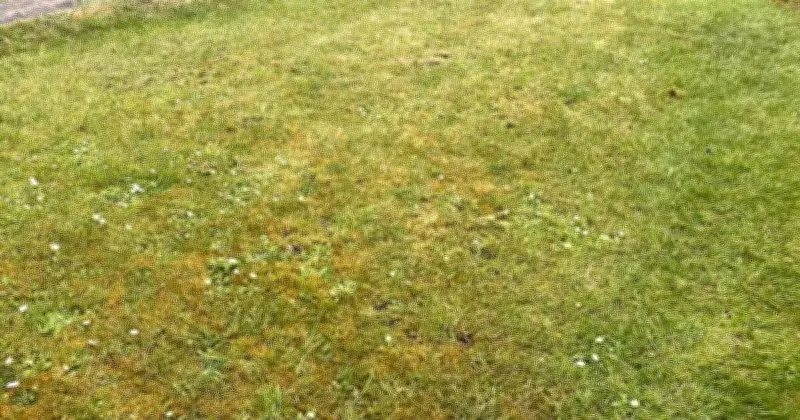
My lawn had been completely taken over by moss and weeds, leaving almost no healthy grass. Shaded spots, damp soil, poor drainage and weak growth had created the ideal conditions for moss to spread and crowd out the grass.
Determined to fix it without harsh chemicals, I looked up gardening expert Monty Don's blog and came across his advice on reviving lawns through scarification and aeration. I decided to put it into practice.
What scarifying and aeration do
Scarifying strips away excess thatch and moss from the base of the grass to encourage healthier growth. Aeration then pierces the soil to improve the circulation of air and water down to the roots.
Monty Don suggested that a garden rake and fork can be used to scarify and aerate. But my lawn is considerably large and severely affected by moss, so doing it manually would take a huge amount of time and effort. Instead, I tested an electric scarifier that doubles as an aerator.
My three-hour lawn rescue
The machine I used was the VonHaus Scarifier and Aerator 2000W. I mowed the lawn to around two to three centimetres first, then adjusted the scarifier blades so they penetrated the ground to two to three millimetres, testing the depth on a small section first.
I worked evenly over the whole lawn in one direction, then turned and went diagonally across again. It was nerve-wracking to watch a path of devastation left behind by the machine, and the collector box was full by the end of the first run to the top of the garden.
There were many ridges in the lawn after that first pass, and plenty of moss still underneath. So I ran the scarifier up and down the entire lawn, then diagonally from bottom left to top right, and then from bottom right to top left.
Keep your nerve
My advice is to keep your nerve, because your lawn will look alarmingly threadbare after scarifying and aerating. Once the scarifying was done, I swapped the rollers for the aerator mode, adjusted the settings based on my soil type and how deep I wanted the spikes to go, and walked slowly across the lawn.
The next step in restoring my lawn is to overseed it and apply a layer of top dressing.