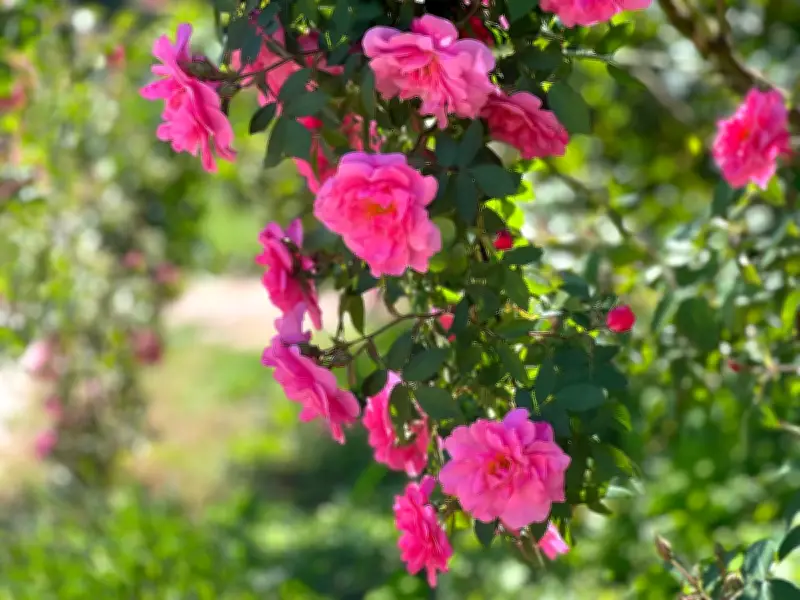
Monty Don has shared essential advice for gardeners on maintaining rambling roses, urging them to complete a key task this month to avoid a tangled mess and promote abundant blooms. Rambling roses, known for their vigorous growth and arching stems, are ideal for covering walls, pergolas, or trees, but without proper care, they can become unproductive.
Deadheading and Pruning Ramblers
In his blog, Monty Don emphasized: "It is very important to keep dead-heading roses as the petals fade to encourage repeat flowering, but some roses have now finished all that they are going to do this year." Many ramblers, particularly in southern England, stop flowering by July. Varieties such as Wedding Day, Paul's Himalayan Musk, and Felicite Perpetue require pruning once their blooms have faded.
Don clarified the difference between climbers and ramblers: "If you are in doubt as to whether your rose is a climber or a rambler, ramblers tend to be much more vigorous and always have a mass of small flowers that never repeat once they have finished."
Pruning Techniques for Healthy Growth
For ramblers grown in trees, Don advised leaving them unpruned except for any unruly growth. However, if space is limited or the rose is trained, he recommended: "This year's new shoots should be tied in or cut back according to the circumstance. Remove any damaged or very old shoots, cutting them right back to the ground."
He added: "If training round a vertical support it is best to wind the stems in a spiral. Otherwise, the more horizontal the stems can be trained, the more flowers will be produced next year. Finally, tie in any loose growth and mulch well."
RHS Guidance on Renovation and Rose Blindness
The Royal Horticultural Society (RHS) also provided advice, noting that late summer is the optimal time for pruning ramblers. They stated: "Renovation can be carried out at any time between late autumn and late winter. It is easier to see what you are doing when the rose is not in leaf, plus there is a better response from the rose, which should grow back vigorously the following spring."
Rose blindness—a condition where roses fail to produce blooms—can result from improper pruning or poor growing conditions. The RHS recommends well-drained, fertile soil for ramblers. They added: "Rambler roses prefer well-drained, fertile soil. Many tolerate a degree of shade, although they'll flower more abundantly in sun. Most are robust enough to withstand a windy site."