
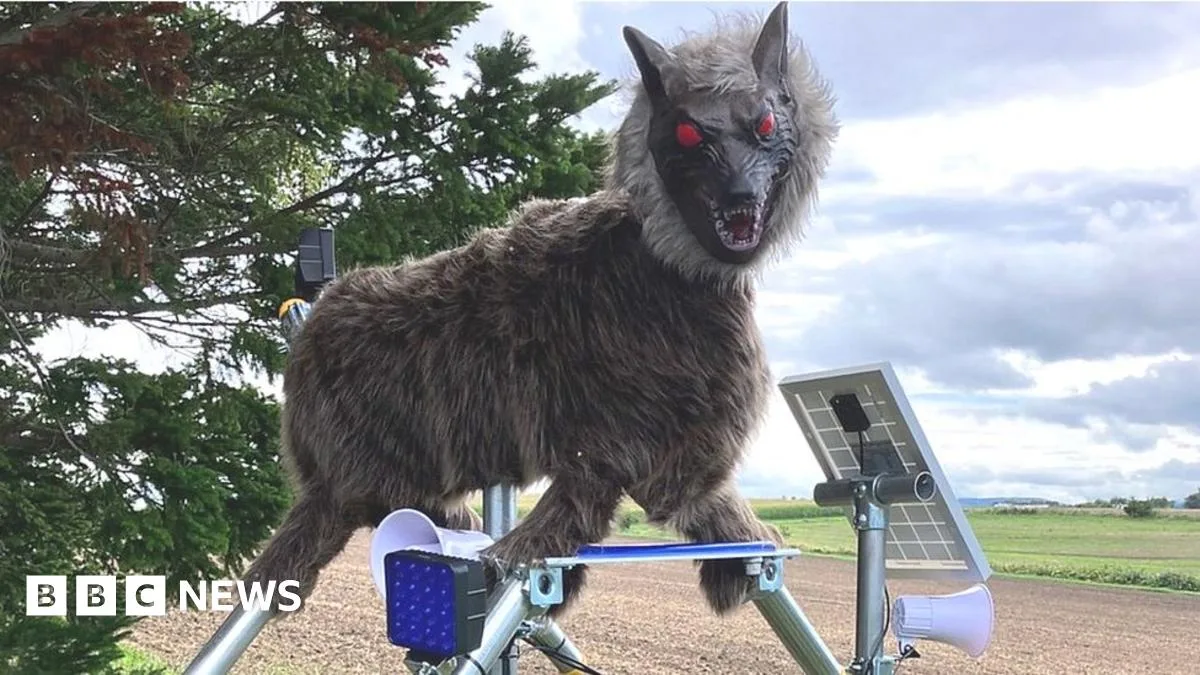
Demand for a robotic wolf designed to scare away bears is surging in Japan as authorities grapple with a rising number of bear attacks. The 'Monster Wolf', equipped with glowing red eyes, bared fangs, and bone-chilling howls, was originally developed to protect farms from wild animals. It was first deployed in Takikawa city in autumn 2020, and since then, more local governments have ordered the device, according to Motohiro Miyasaka, president of manufacturer Wolf Kamuy.
Experts attribute the increase in bear encounters to demographic changes. Young people are leaving rural farming villages for cities, leading to the abandonment of agricultural land in the foothills that once served as a buffer between bears and humans. 'More and more, rural farmlands in the foothills that once acted as buffer zones between the bears and humans are disappearing,' said Shinsuke Koike, a professor at the Tokyo University of Agriculture and Technology. As a result, bears have moved into untended woodlands, becoming accustomed to urban environments and less fearful of people.
Japan's bear population is growing while its human population ages and shrinks. Government data estimates around 12,000 brown bears in Hokkaido, with experts putting the Asian black bear population at about 10,000. In 2021, at least four people were killed and 10 injured in Hokkaido alone, marking one of the deadliest years on record. Bear incidents typically peak in April, when bears emerge from hibernation, and again in September and October, when they forage for food before winter.
Climate change has worsened the situation by reducing acorn harvests, a key food source for bears. Warmer springs disrupt oak tree pollination, leading to smaller acorn crops. 'What we need to think about doing now is how to get the bears back into the mountains,' said Mr Koike. However, authorities face challenges, including a lack of wildlife management expertise and poor coordination among government ministries, according to research biologist Tsutomu Mano. With a decreasing number of ageing hunters, officials are struggling to address the problem effectively.




