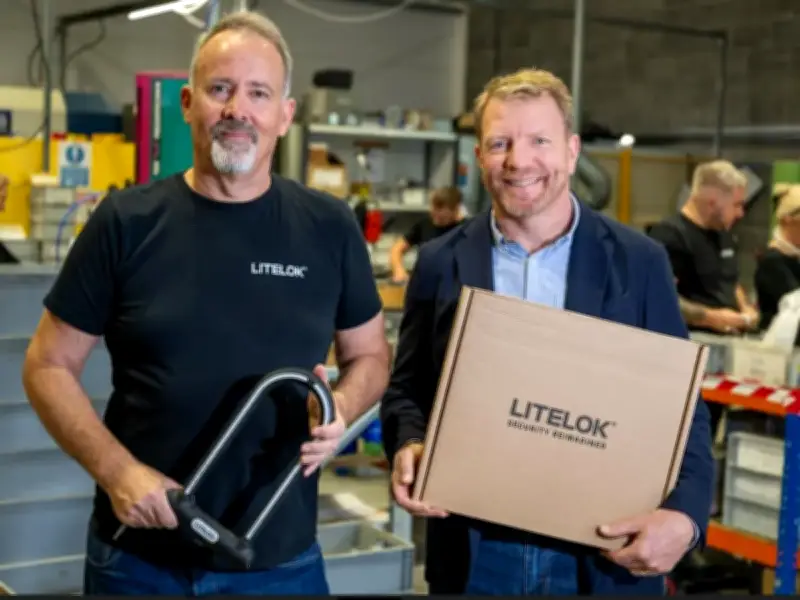
Litelok, a Swansea-based manufacturer of high-security, grinder-resistant locks for bicycles and motorcycles, exemplifies the type of company flagged by research from Economic Intelligence Wales as a “productivity hero”, according to Giles Thorley, chief executive of the Development Bank of Wales.
Writing in an opinion piece, Thorley said he recently visited Zeal Innovation, which trades as Litelok. The company designs and manufactures its locks from a solar panel powered factory in Swansea. Thorley, a customer of several Barronium armoured X1 bike locks, said they are “the best in the world”.
Neil Barron, founder and chief executive of Litelok, had a great idea and found a gap in the market, Thorley said. The Development Bank of Wales has backed the company through four funding rounds, but Thorley said he was most impressed by its culture of continuous improvement.
What is a Productivity Hero?
A productivity hero is a business that grows its turnover, creates jobs and improves productivity all at the same time. Revenue grows faster than employment, meaning the business becomes more productive without sacrificing growth or opportunities for its workforce.
In the case of Litelok, it has increased its turnover per full-time employee from some £45,000 in 2017 to some £350,000 in 2026 as annual revenues approach £10m.
Report Findings
The productivity heroes report from Economic Intelligence Wales identifies 1,732 businesses across Wales that fit this description. Together, they generated more than £6bn in turnover while creating over 5,200 jobs.
The research points to three common characteristics among these businesses: an unwavering focus on customers, a willingness to invest in people through leadership and skills, and a culture that embraces innovation and digital adoption.
Implications for Wales
Thorley said the report challenges long-held assumptions. Productivity heroes are not confined to one sector or one part of Wales. They can be found in manufacturing, food and drink, construction, professional services and technology, operating in rural communities and cities alike.
He said the question is not whether Wales has productivity heroes, but how to create many more of them. This means ensuring businesses have access to leadership development, skills, innovation support and the finance they need to invest with confidence. It also means creating conditions that allow good businesses to become great ones, and building an economy where successful Welsh businesses can grow, scale and retain their value in Wales.