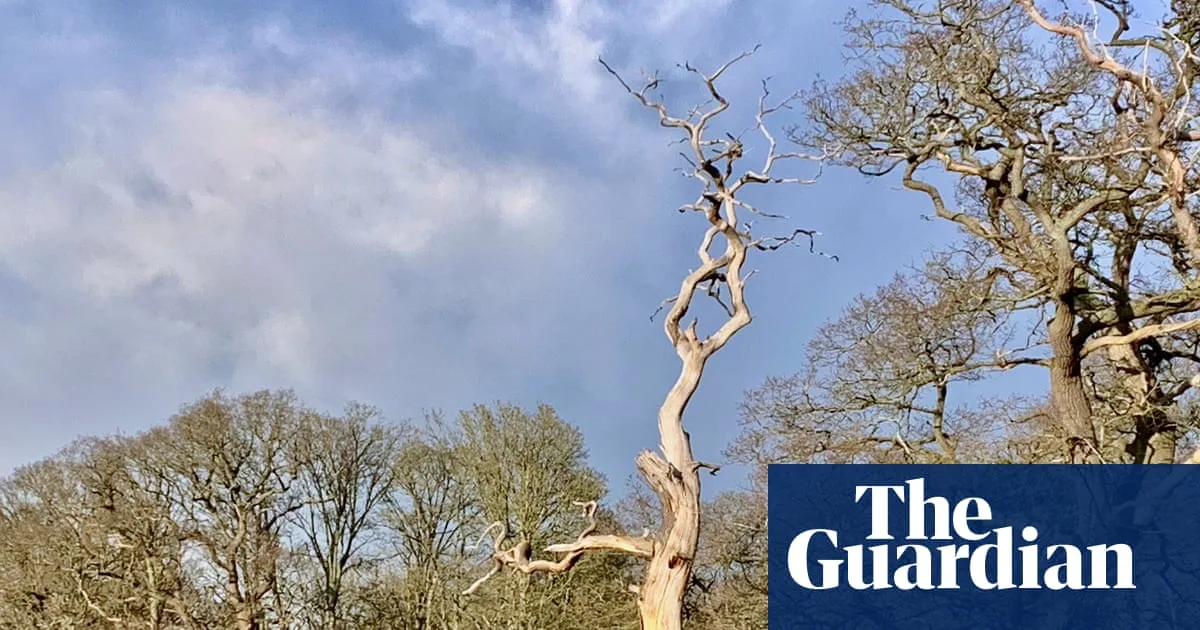
In the serene landscape of Attingham Park near Atcham, Shropshire, a striking natural monument captures the attention of visitors and naturalists alike. A tall, pale, barkless pole stands amidst ancient oaks, a silent witness to centuries of change. This is a kelo tree – a dead Scots pine that refuses to fall, embodying a fascinating intersection of life, death, and endurance.
A Testament to Time and Resilience
The kelo tree, estimated to be over 300 years old, has been deceased for many of those years, yet it remains upright and structurally sound. The term "kelo" originates from Finnish, referring to dead standing timber, and has gained common usage among ecologists and tree enthusiasts. Unlike typical dead trees that quickly succumb to rot and collapse, this kelo tree exhibits remarkable resilience.
The Science Behind Its Standing
Without its protective bark, the tree's external sapwood becomes colonised by blue-stain fungi. These fungi impart a distinctive silver-grey hue and, crucially, utilise cell contents without destroying them. This process delays the invasion of rotting fungi, effectively slowing decomposition. Additionally, the heartwood of the Scots pine resists decay due to terpenes and antifungal components present in its resin.
This biological fortification means the tree could stand for another 300 years, creating a unique ecological niche. When it eventually falls, it will provide a rare habitat for basidiomycetes, known as kelo fungi. These fungi are so scarce that, due to the diminishing availability of such substrate, they have nearly vanished from lowland Europe.
Reflections on Mortality and Permanence
Inspired by John Clare's poem To a Dead Tree, which contemplates mortality through the lens of a deceased tree, this kelo tree offers a different perspective. Rather than symbolising an end, it represents a prolonged, almost eternal, presence. It stands as a "pillar of salt" in life's drama, enduring storms and blizzards, including recent tempests like Storm Gerrit, with unwavering defiance.
The tree's inward turn, a "supreme act of endurance beyond death," supports saproxylic communities – organisms dependent on decaying wood. It points skyward, a stylus amidst turbulent skies, reminding observers of nature's intricate cycles and the beauty in decay.
A Symbol for Modern Anxieties
In moments of unease, perhaps during the uhtceare – the Anglo-Saxon term for the pre-dawn hours filled with anxiety – the image of the kelo tree offers solace. Its resolute stance against the elements serves as a metaphor for resilience in the face of personal troubles. It encourages a mindset where challenges can "break over" a steadfast presence, much like waves against a rock.
The kelo tree in Attingham Park is more than a botanical curiosity; it is a living lesson in patience, ecological importance, and the subtle harmonies of the natural world. It urges respect for standing dead trees and, when they fall, advocates for leaving them undisturbed to continue their vital role in the ecosystem.