
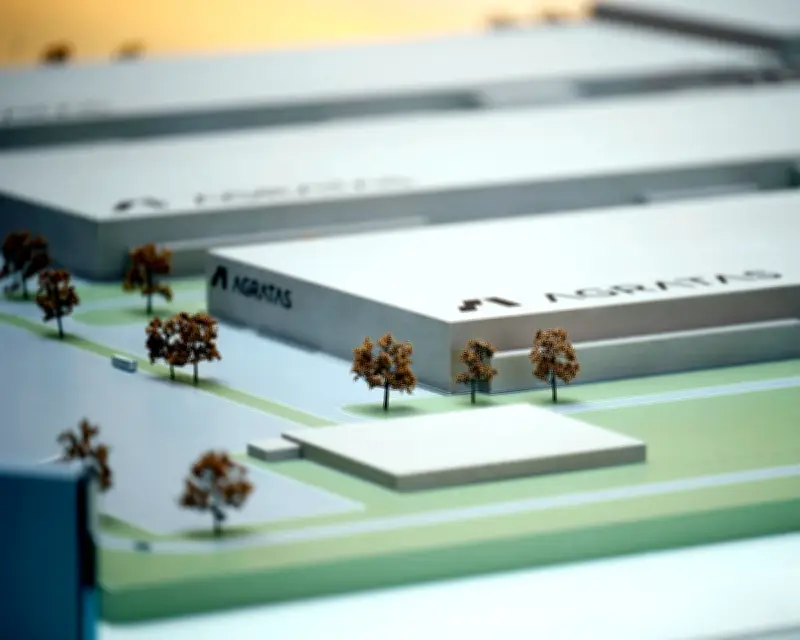
Jaguar Land Rover (JLR) faces potential delays to the first deliveries of electric car batteries from a £5.2bn government-backed factory in Somerset after construction problems at the site. The British carmaker plans to rely on the Agratas gigafactory in Bridgwater, Somerset, to supply batteries for its new electric models. Both Agratas and JLR are owned by Indian conglomerate Tata.
Factory Turmoil
The battery factory, only the second in the UK, is seen as a key step in the domestic car industry's transition away from fossil fuels. The UK government pledged £380m in subsidies for the plant in April. However, Agratas has terminated its main construction contractor, Sir Robert McAlpine (SRM), and replaced it with Tonroe Group Ltd (TSL). Agratas informed SRM that its services will not be required beyond the end of the month, giving only three weeks' notice by letter.
Delays and Budget Issues
When Tata initially announced the gigafactory in 2023, it targeted a 2026 start date, later pushed back to 2027. However, the latest internal start date of January 2028 is also likely to be missed. Agratas has set a budget of about £800m for construction, but actual costs are likely to exceed that by at least £500m, according to a person with knowledge of the project. Agratas is also building a gigafactory in Sanand, western India, and its Indian management is thought to have pushed for costs in the UK to match the other project.
The budget mismatch has caused tensions as contractors, including SRM, tried to hit targets they saw as impossible to deliver. SRM was never under contract but worked under a temporary arrangement known as a letter of limited authority for more than two years, billing about £400m without ever reaching a contractual agreement.
Contractor Departures
This is the second departure of a leading contractor after TClarke left in March amid reports of a 'strained relationship'. These departures are likely to be noted by other companies in the supply chain and may cause concern in government over the progress of a heavily backed project.
The new construction contractor, TSL, a privately owned business based in Buckinghamshire, will have to get up to speed quickly with demanding requirements, including building facilities to handle dangerous electrolyte and constructing one of the largest clean rooms in Europe with stringent humidity controls. TSL's main focus is building datacentres, although it was also involved in constructing a battery factory for Sweden's now bankrupt Northvolt.
Behind Schedule
Several parts of the project are understood to be behind schedule. Agratas has not bought crucial parts to build a substation for the electricity connection, equipment that can take two years or more to arrive. Work has not started on an important ring road, and the building itself is well behind schedule due to slowed purchasing decisions. There has also been relatively high turnover of senior staff within Agratas in the UK, including the departure of its head of process engineering and vice-president of global manufacturing engineering, while its vice-president of manufacturing operations will take early retirement in August.
Impact on JLR
Delays to Agratas's start of production could prove challenging for JLR, which depends on its sister company for cells to power its new electric Jaguar and Land Rover models, including the already delayed electric Range Rover. JLR chief executive PB Balaji said in November: 'We are running against the clock on this one. It is stressed, but we'll do our best to reach there.'
Delays could cause significant problems for JLR in complying with the UK's electric car sales targets, known as the ZEV mandate. JLR executives have doubts about whether they can hit much higher targets in the next few years, potentially leaving them exposed to fines. Their warnings are thought to be a leading motivation for the UK government's decision to water down the mandate. A lower ZEV mandate target could remove some time pressure for Agratas. However, JLR has also decided to sell more hybrids rather than battery models, which might raise questions over future demand for batteries from Somerset.
Statements
A spokesperson for Agratas said it had 'determined that a different construction delivery model is needed to support the next phase of our development.' They added: 'Following a review of the project's requirements, we have decided to transition to a new construction partner. We thank our existing construction partner for their support to date. This change reflects the evolving needs of the project, positioning us to deliver the next phase with the capability and focus required to meet our objectives safely, efficiently and on schedule.'
A spokesperson for SRM said: 'Having successfully completed the first phase of Agratas's battery manufacturing facility in Somerset, following extensive discussions, we have mutually agreed to part ways. We are now working closely with Agratas to support a smooth and orderly transition to a new construction partner.'
JLR declined to comment.




