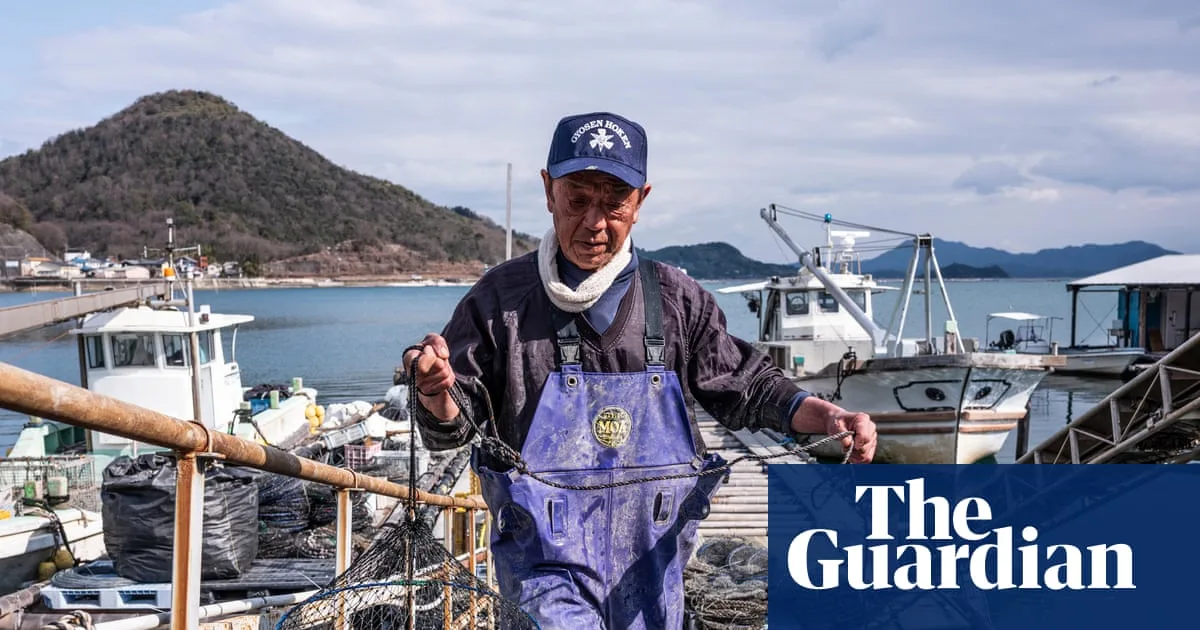
Oyster farmers in Japan’s Hiroshima prefecture are reporting death rates of up to 90%, a crisis experts attribute to rising sea temperatures and last year’s record-breaking summer heatwave. The region produces nearly two-thirds of Japan’s farmed oysters, and the die-offs are threatening a key part of the local economy and food culture.
Taketoshi Niina, who runs a small fishery in Kure, said about 80% of his oysters were dead when brought to the surface this season. “This is something out of the ordinary,” he said. “A lot of those that do survive are in poor condition … not of a high enough quality to sell.” The fisheries ministry reported that mortality rates in parts of Hiroshima have reached as high as 90%, far above the typical 30-50%.
Last summer was Japan’s hottest since records began in 1898, with average temperatures 2.36°C above normal. Coastal water temperatures off Hiroshima from July to October were 1.5-1.9°C higher than the 1991-2020 average, according to prefectural data. Shoichi Yokouchi, head of the marine products division at Hiroshima prefectural government, explained: “Higher temperatures weaken oysters and make them more susceptible to viruses and bacteria.”
In December, Japan’s fisheries agency announced measures to support struggling oyster farmers, including five-year government loans at virtually zero interest and access to mutual aid programmes. Tomonori Uemoto, director of the fisheries promotion office at Kure municipal government, warned that the oyster deaths will have a “significant impact” on local employment in distribution and food tourism.
At the annual Kure oyster festival, long queues formed for grilled oysters, but the shellfish were noticeably scarce and smaller than usual. The pop-up restaurant Kure Oyster Land will close earlier this year due to shortages. Tatsuya Morio, an oyster farmer with over 20 years’ experience, said: “I’ve never experienced this in my whole career.” Experts warn that such mass die-offs could become more common as ocean temperatures continue to rise.