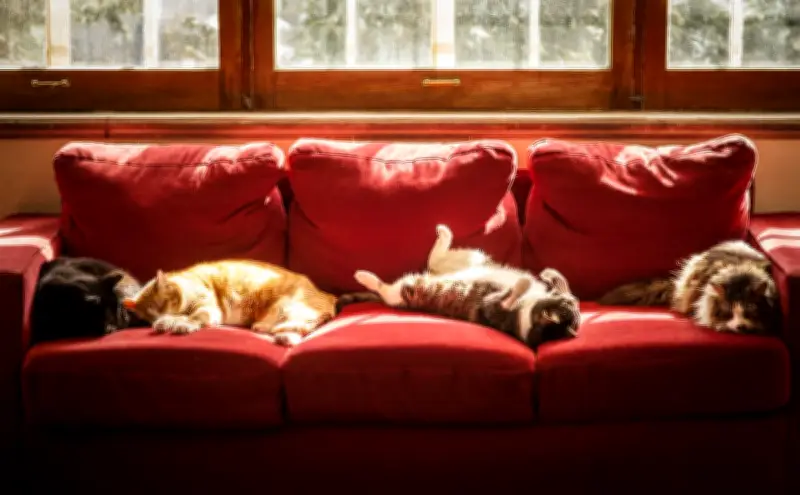
Keeping cats indoors can keep them safe from harm and protect native wildlife. But how can pet owners support their furry friends in making the transition?
Why keep cats indoors?
Cats are a popular pet in Australia: second only to dogs, they’re found in a third of homes, with about 5.3 million felines nationally. Roughly half of owners keep their cats completely indoors, according to a national survey by Animal Medicines Australia.
When cats roam, they risk getting hit by a car, going missing or getting into fights. Now, with the arrival of H5N1 bird flu in Australia, they are also at risk of catching and spreading the virus. When cats catch bird flu, the virus can be deadly. One study, published by the American Veterinary Medical Association, found domestic cats infected with H5N1 had overall mortality rates of 50 to 70%.
Keeping pets indoors, contained in outdoor enclosures known as “catios”, or on a harness, also protects native wildlife. Each roaming puss kills about 186 mammals, reptiles and birds every year, according to research by the Threatened Species Recovery Hub.
Cats that are contained have very little effect on native wildlife, says Rob Brewster, the rewilding manager at the Invasive Species Council, whereas at the other end of the spectrum, the impact on biodiversity is “profound”.
Expert advice
“A safe cat is an indoor cat,” says wildlife veterinarian Dr Tania Bishop. “Roaming cats already face threats from cars, snakes, dogs, ticks, powerful owls and disease. With H5 bird flu now at our doorstep, there is also a risk cats could become infected by scavenging or coming into contact with sick or dead birds.”
“Cat containment is one of those rare measures that’s a win for everyone – it’s better for cats, better for wildlife and better for communities.”
But what do you need to know before bringing your outdoor pet indoors?
Setting up your home
Dr Julia Henning, who researches feline behaviour at Adelaide University, says pet cats “walk a tight line between domesticated and wild”, and can maintain many of their wild instincts and behaviours. “Some of those behaviours don’t often go down well in human homes, such as scratching, if we don’t give them something like a scratch post to do it on.” But owners may need to offer a few different scratch posts before finding one that works, as “cats can unfortunately be a little bit picky,” she says.
It’s important to give cats an adequate-sized litter tray where they can bury their poo, as that’s another natural behaviour, she says. “Cats like to bury their poop. It’s an instinct they have because cats are what we call mesopredators – they’re both a predator and prey animal.”
Cats also need access to sunlight, Henning says. That could be a room with a nice window, or building them an enclosure with controlled access to the outdoors.
Adjusting to indoor life
Cats are incredibly adaptable, Henning says. A recent study of cats that were moved indoors found most adjusted quickly – some within days, others in weeks. “It will vary depending on the cat and depending on how old they are and what sort of lifestyle they’ve had previously.”
Animals kept indoors may seek more companionship and interaction, she says. “Cats are social creatures.” “Cats have often gotten a bad rap as being kind of aloof, or an animal that doesn’t really like company or attention. But that’s not really true.”
“If you are moving your cat inside, you’ll probably notice that they want more attention from you. If you don’t give that to them in positive ways – like playing with them with a toy, or brushing them, or cuddling with them – they will probably try and get your attention in ways that you don’t like as much,” she says.
It can be people, rather than their pets, who struggle the most with the transition, she says, especially if their cat is meowing all the time or engaging in destructive behaviours. “We love our animals, we don’t want to cause them stress,” she says, which can lead to people letting their cat outdoors again, making it even harder to transition them indoors later.
One approach is to progressively restrict outdoor access, starting with keeping them indoors from dusk to dawn.
Rules and regulations
The rules on keeping cats indoors differ by state and territory, and sometimes even by local government area. The Australian Capital Territory, for example, requires all cats born after 1 July 2022 to be contained, while several Melbourne councils have adopted cat curfews. Yarra city council, in inner Melbourne, requires pet cats to be contained between 7pm and 7am, while cats in the neighbouring Merri-bek council area that were registered after April 2027 must be confined to within an owner’s property boundaries.
Long-term benefits
In general, most indoor cats live longer and maintain a higher quality of life than those allowed to roam. The RSPCA says many cats can successfully transition from roaming to staying at home, but it’s a “big change”. “It is important to optimise the cat’s environment, take things slowly and gradually, monitor the cat’s behaviour and welfare, and be responsive and respectful to their individuality and needs to safeguard their welfare.”
Research suggests that bringing your cat indoors will probably be a lot easier than you think, says Henning. “But if it’s harder, that’s OK too, and you can go to your vet, you can see a behaviourist, and there is information out there about how to make the transition.”