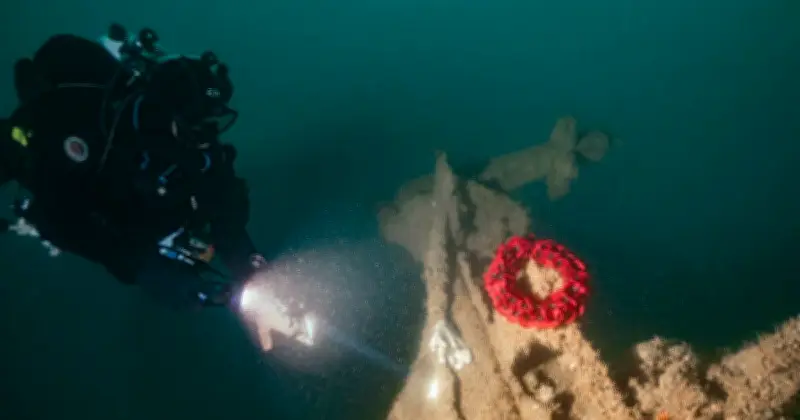
The wreck of a Royal Navy warship missing for 118 years has been discovered in the English Channel. HMS Tiger disappeared beneath the water in 1908 following an accident during a training exercise.
Despite searches dating back to the time of the sinking, the vessel's final resting place remained unknown for more than a century. A team of divers from ProjectXplore located the wreck off the Isle of Wight after spending five years researching archival material and piecing together information to pinpoint its location.
Collision during Fleet exercises
The torpedo boat destroyer was taking part in exercises with the Fleet when it strayed into the path of another warship. HMS Tiger was cut clean in two in the collision, according to the Royal Navy. Fewer than half of the 57 crew members on board survived.

The disaster attracted widespread attention at the time and made front-page news. King Edward VII sent a telegram expressing his sympathy, while commemorative postcards were later produced in memory of the crew.
ProjectXplore's discovery
The group has previous experience finding long-lost vessels, having also discovered the wreck of Royal Navy cruiser HMS Nottingham in the North Sea last year.
ProjectXplore co-organisers Leo Fielding and Dan McMullen said: "It has been the privilege of a lifetime to research, discover and document the wreck of HMS Tiger. We sincerely hope that our work will ensure that HMS Tiger, her story and the memory of those connected with her endure for future generations."
Possible legal protection
The newly discovered wreck could also receive greater legal protection under legislation currently being considered by Parliament. The Armed Forces Bill would change the way military shipwrecks are protected.
The Royal Navy said the legislation would allow potentially thousands of military shipwrecks, including HMS Tiger, to be protected from the moment they are discovered through a "protected place" designation. Under the plans, people would not be allowed to disturb a protected military wreck or remove objects from it without permission. Divers would still be able to visit the sites, however, provided they follow the principle of "look but don't touch".