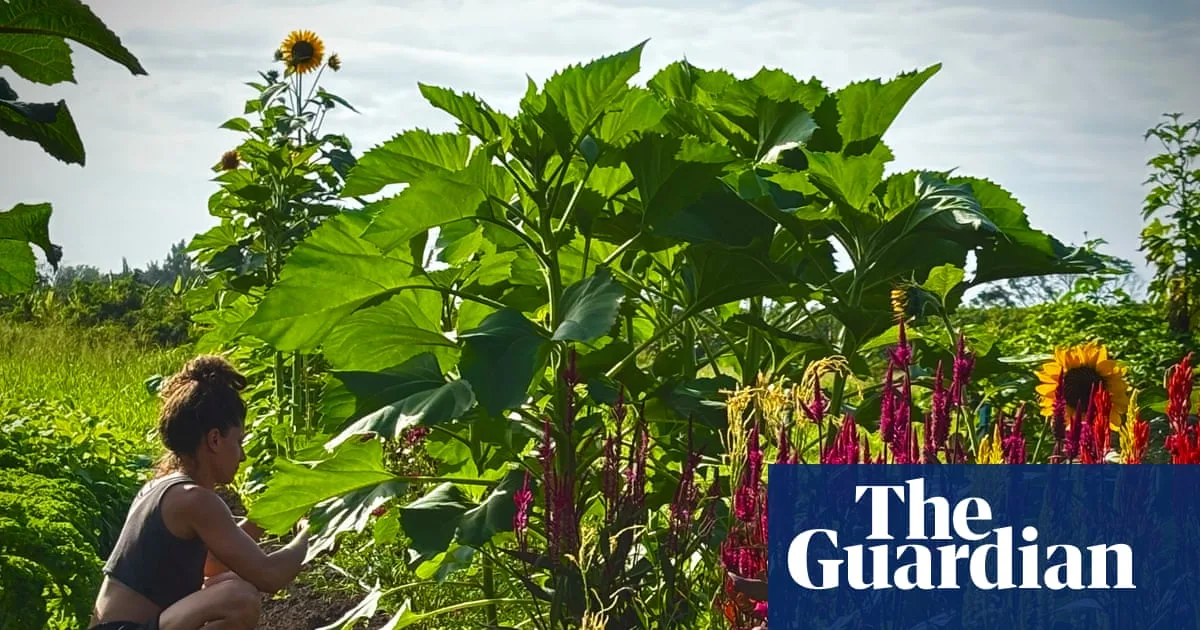
Eddie Oroyan's farm on the north shore of Oahu was thriving until two kona low storms dumped up to 50in (127cm) of rain on the island, flooding fields and submerging equipment. Oroyan and his wife Jessica Eirado Enes had started LewaTerra Farm last year and were delivering vegetables to customers and selling at markets. After the first storm, they quickly began replanting, but a second, more perilous storm forced them to evacuate in chest-deep water. They returned to find almost a complete loss of crops, with disease already setting in. 'The crops were completely covered,' Oroyan said.
The floods, some of the worst since 2004, caused an estimated $1bn in damage across Hawaii. More than 300 farms have reported about $17.5m in damage, according to Brian Miyamoto, executive director of the Hawaii Farm Bureau. 'This is so widespread that the need is astronomical,' he said. Cleanup has been hampered by significant debris, damaged roads, and thick mud.
Haley McKinnon, who runs Ahiki Acres with her husband Matthew in Waimanalo, said this was not their first experience with intense flooding, but the first storm brought about 20in of rain in her area, which typically sees 30in annually. Blake Briddell and Brit Yim, who farm eight acres on the north shore, had prepared by elevating equipment, but the storm arrived sooner than expected. They had to evacuate when water surrounded their living space. Briddell recalled waking at 1.30am to find the water shin-deep, leaving them stuck.
Oroyan and his wife spent days cleaning up, leaving soaked equipment to dry and replanting crops such as eggplant and okra. The dense clay soil, rich in minerals, does not soak up water well and swallows shoes and tractors. Despite the setbacks, farmers are beginning the recovery process, though many face long-term challenges.