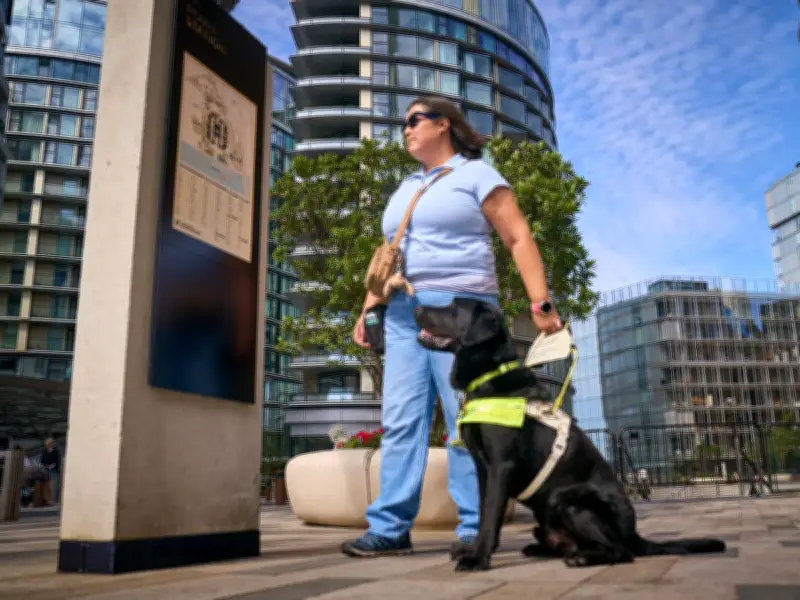
A poll of 2,000 adults reveals that while 97% are confident they know what a guide dog is, many hold surprising misconceptions about their abilities and behaviour. Some falsely believe guide dogs can read traffic lights, identify bus routes, use a map, pick out specific items in a shop, or act as guard dogs. Others think guide dogs themselves are blind or that they help their visually impaired owner around the home.
What Guide Dogs Actually Do
In reality, a guide dog helps someone with sight loss walk safely in public places. They guide their owners around objects and people, avoid trip hazards, find kerbs, and locate shop doors and crossings. However, the owner must know where they are going and controls decisions like when it is safe to cross the road.
Partnership with Pubs to Educate
To educate Brits, Guide Dogs has partnered with Instant Quizzes, which supplies weekly quiz packs to more than 1,000 pubs across the UK. The goal is to bring a dedicated guide dog round to quiz nights nationwide in August.
Hannah Wright, Guide Dog programme lead, said: “A staggering 84% of Brits agree we are a nation of dog lovers, and whilst our guide dogs are well-known, there are many things people get wrong.”
Common Misconceptions
Other misconceptions include the belief that guide dogs can memorise entire towns and cities to lead their owner to any destination without needing directions (24%). By comparison, more people correctly knew the name of Taylor Swift's new husband, Travis Kelce (29%). Only two thirds (66%) knew not to approach a dog while it is in harness and working — something that can distract the animal and affect the person’s ability to navigate safely.
Guide dog owner Kimberley Heal said: “When my guide dog Dalby and I are out together, we're a working partnership and we both need to stay focused. When people try to feed, stroke or talk to Dalby while he's guiding me, it breaks his concentration and mine. That can leave us confused and put my safety at risk. It can be incredibly stressful because I'm constantly having to think about what's happening around me. It's especially difficult at traffic lights and crossings, where people sometimes grab me or Dalby without even asking first. I really appreciate it when people offer assistance respectfully, but so often people speak to my guide dog instead of me. A simple moment of consideration can make a huge difference, helping us travel safely and independently.”
Breed Confusion
There was also confusion about which breeds can become guide dogs. Only 65% correctly identify both a Golden Retriever and yellow Labrador, 59% correctly identify black Labrador, and only 40% German Shepherds. Just 15% were aware that a Labradoodle can become a guide dog. In comparison, 55% knew the host countries for this year's World Cup, and 42% can correctly name all the Spice Girls.
Hannah Wright added: “By dispelling these myths and misconceptions, we hope people will feel more emboldened and confident in their knowledge around guide dogs.”
True or False? Guide Dog Facts
- Guide dogs can go into cafes and restaurants where food is served – 66% - TRUE
- Guide dogs help people around their homes – 64% - FALSE
- Guide dogs can go into shops that aren’t dog friendly – 62% - TRUE
- Guide dogs get to have a retirement in later life – 56% - TRUE
- It’s illegal for a taxi driver without a medical exemption to refuse to carry a guide dog – 55% - TRUE
- You have to be officially registered as severely sight impaired to have a guide dog – 46% - FALSE
- Guide dogs are always working – 34% - FALSE
- Guide dogs get to run around off lead – 26% - TRUE
- Guide dogs can read traffic lights – 21% - FALSE
- Guide dogs are also known as blind dogs – 14% - FALSE
- Guide dogs can identify shops by their signage – 13% - FALSE
- It’s OK to feed/give a treat to a guide dog – 9% - FALSE
- It’s acceptable to stroke a working guide dog – 7% – FALSE
- Guide dogs themselves are blind – 3% - FALSE