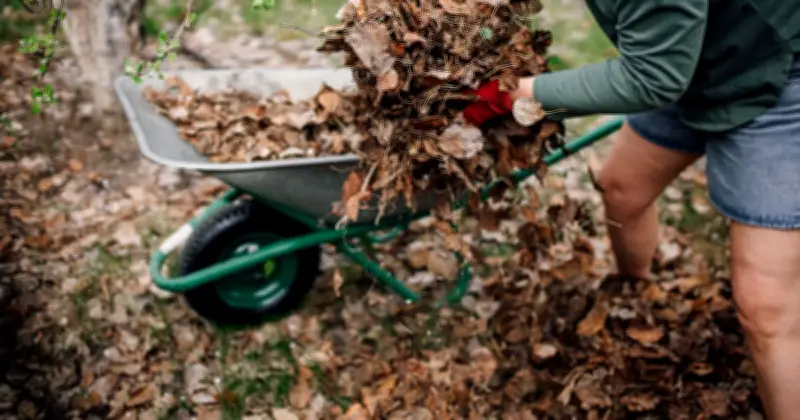
Gardeners are being urged to keep hold of fallen leaves this October, as the autumn piles offer a range of benefits for keeping gardens healthy through the colder seasons.
As temperatures drop and daylight hours shorten, plants need extra care to remain stable. Regulating soil temperature is crucial during cold weather because it directly controls seed germination, root development, and the ability of plants to absorb water and nutrients. In cold conditions, a plant's ability to absorb nutrients slows down and roots struggle to take up water.
Using leaves as mulch
Fallen leaves can be used as mulch — a protective layer of organic or inorganic material placed on soil to retain moisture and suppress weeds. Mulching is particularly important as the weather turns cold, as it helps insulate plant roots and prevent frost heaving.
Acting like an insulating blanket, mulch keeps soil temperature regulated, especially during freezing temperatures, allowing the plant system to work more efficiently.
To use fallen leaves as mulch, gardeners can shred them with a mower or leaf shredder and layer them around shrubs, trees and borders. It is advised to avoid placing the layer near plant stems, as doing so can encourage rot.
Making leafmould
Leaves can also be turned into leafmould, a natural soil conditioner made from decomposed leaves. To make it, collect the leaves, shred them, and place them into a bin liner, moistening them if they are dry. Pierce holes in the bag with a knife or garden fork, tie the top loosely, and stack the bags away for up to two years.
The RHS explained that well-rotted leafmould, more than two years old, can be used as seed-sowing compost, or mixed with sharp sand, garden compost, and good quality soil to use as potting compost. Leafmould that is less than two years old can be used as mulch, soil improver, a top-dressing for lawns, or winter covering for bare soil.