
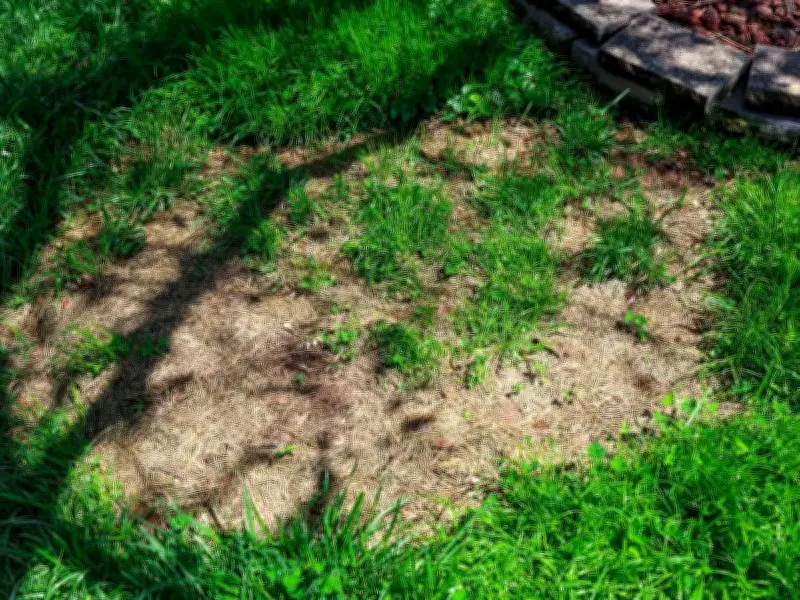
A gardening expert has revealed a "hassle-free" method for tackling unsightly bare patches on lawns which he claims works "every time". For those seeking a pristine lawn, patchy areas can prove particularly troublesome, but a simple technique could help grass seed establish itself "much more reliably".
Why lawns are patchy
One of the main reasons grass can turn pale or brown is a lack of moisture in the soil. Lawns will likely be really weak at the moment following the extremely dry summer with multiple heatwaves across the country.
Richard, who operates the Sheffield Made Gardens and Sheffield Made Plants YouTube channels, previously shared what he described as the "exact way" to ensure grass "grows back in properly".
Starting a video on the subject, he said: "Have you got a bare patch in your lawn that just refuses to fill in? Well, there are a few simple tricks that make grass seed germinate much more reliably. I'll show you the exact way to do it so it actually grows back in properly. It's a hassle-free method that works for me every time."
He outlined how, following the installation of a patio and greenhouse the previous winter, a bare strip of soil was left behind that "snakes around" and required attention.
Richard explained that autumn is the best time for sowing grass seed, with spring being the second-best option.
Step-by-step lawn repair
Explaining that he would be using an all-purpose seed mix, Richard set about the job. He noted that he'd previously tried to level the area to match his patio height, but the first task involved removing large stones, fallen leaves, and weeds.
He then gently raked over the surface to break up the topsoil. If the ground still looks uneven, Richard advised to simply add more soil but warned against using compost, as it has a tendency to "shrink down" and leave an "uneven finish".
Richard then started spreading the seed, explaining: "Now, the trick here is to not go too heavy because cramming too much seed into one spot can actually work against you."
He continued: "The seedlings end up competing with each other and none of them do as well as they should."
Richard also scattered some of the seed amongst the existing grass to help the new growth blend in.
Covering and watering
The next step was described as the "most important": covering the seed to protect it from birds and improve contact between soil and seed.
For this task, Richard passed topsoil through a garden sieve. He suggested applying only a "light dusting" to the affected area—around half a centimetre—noting that large lumps will only hinder the seedlings.
A gentle watering comes next, what Richard calls a "nice soft spray". He warned against giving the soil a "blast" to avoid washing the seeds into one corner.
He advised to make sure it was "nicely damp" but don't overwater. Richard continued: "And then it's just a case of keeping an eye on it and waiting for germination. Now the biggest danger at this stage is the seed drying out. So if you can, water it at least twice a day in dry weather to keep that top layer nice and moist."
The first shoots should appear in roughly a week. When Richard revisited the patch three weeks on, it had been transformed, with fresh growth evident across the area.
He pointed out that it's normal for the lawn to be slightly patchy for a couple of months, as it will fill out once you start mowing the space. Richard cautioned us to "resist the temptation" to scatter more seed, unless it stays patchy after a few months.
Finally, Richard emphasised that the "most important thing" is patience and preventing the area from drying out.




