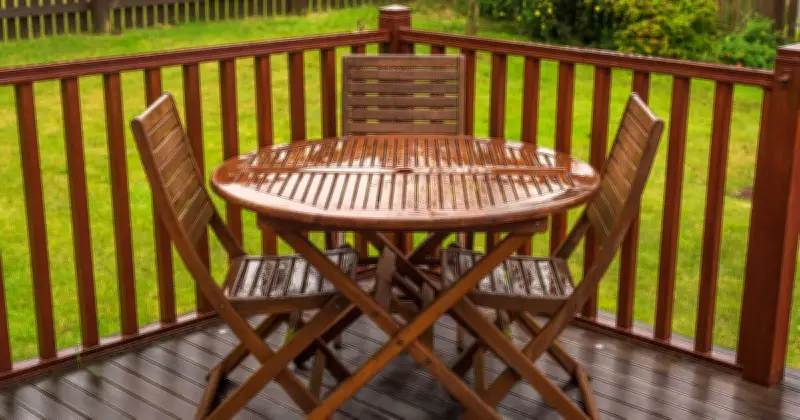
Homeowners are being urged to clean and treat their garden furniture before the end of September to prevent mould and mildew from developing as wetter autumn weather approaches.
Outdoor living experts at TDP say that leaving furniture exposed to persistent rain can create ideal conditions for mould and mildew to grow. This can ruin furniture and shorten its lifespan.
Mould can develop in 24 to 48 hours
Mould can develop in as little as 24 to 48 hours once furniture becomes damp, meaning even a short spell of wet weather can cause lasting damage if left to build up.

Kym Barlow from TDP said: "It’s hard to picture after the summer we’ve had, but we’re likely to face much wetter conditions as we get into autumn, meaning mould and mildew can become a real problem for outdoor furniture if you don’t take care of it properly."
"While we’re still at the back end of summer, it’s important to make the most of any dry days to give your furniture a good clean, and treat materials such as wood so that they’re in the best condition possible going into the colder months," she added.
Treat wood before autumn begins
Autumn officially kicks off on September 23, according to the astronomical calendar, so Brits are being urged to take action before then.
One of the most important things you can do to protect furniture from the elements is to treat the wood. While materials like recycled plastic or metal don’t require treatment specifically for mould, it’s good practice to apply a preservative such as an oil, stain or varnish to wooden furniture to help protect against water absorption and mould.
If you plan to store furniture away until spring, make sure it is completely dry first. Moisture creates ideal conditions for mould and mildew growth.
Choose breathable covers
For those using furniture covers, the same rule applies. Covers protect furniture from rain, but completely airtight ones can trap moisture underneath.
Instead, choose breathable, weather-resistant covers. If storing furniture inside a shed, ensure there is enough airflow to prevent condensation and damp air from building up.