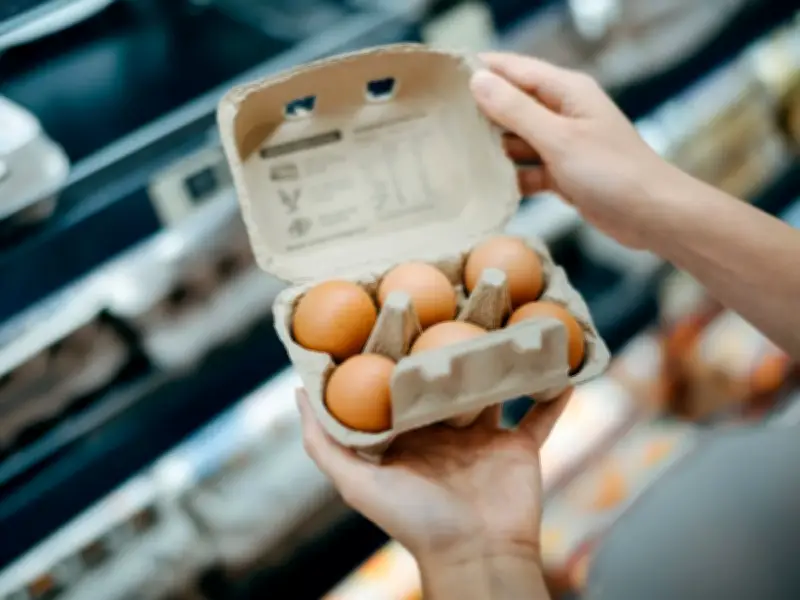
Free-range eggs will continue to be sold under that label in England even though all chickens must now be kept indoors under a mandatory poultry housing order prompted by rising bird flu cases.
The housing order, which takes effect from November 13, applies to anyone who keeps 50 or more birds, or who sells or gives away eggs, poultry products or live birds. Specific exemptions will apply for some zoo birds.
Labelling rules unchanged
Under legislation introduced last year, producers and packers can legally continue to label and sell eggs as "free-range" for the entire duration of a mandatory housing order, such as those introduced for bird flu outbreaks. Before the Free-Range Egg Marketing Standards act was amended, producers were required to label free-range eggs as "barn eggs" if laying hens had to be kept indoors for longer than 16 weeks.
Under UK regulations, free-range chickens must have continuous daytime access to open-air runs that are mainly covered with vegetation, with a minimum floor space of four square metres per hen.
Biosecurity measures required
The government has introduced a "chicken lockdown" each winter since 2021, when the risk of avian flu peaks due to migration patterns. The most recent mandatory poultry housing order was lifted in April 2026 when risk levels subsided.
Under the order, all keepers, including pet owners with chickens in their back garden, will be required to put in biosecurity measures to prevent disease. These include reporting changes in egg laying, mandatory record keeping, disinfecting footwear, clothing, cars and equipment, and cleaning and disinfecting housing and concrete paths regularly.
UK chief vet Christine Middlemiss said: "Bird keepers are urged to comply with the housing measures and to exercise robust biosecurity, remaining alert for any signs of disease and reporting suspected disease immediately to the Animal and Plant Health Agency."
"Having avian influenza confirmed in your flock can be devastating, I understand the impact this disease can have on the poultry sector and am extremely grateful for the continued co-operation of the industry."