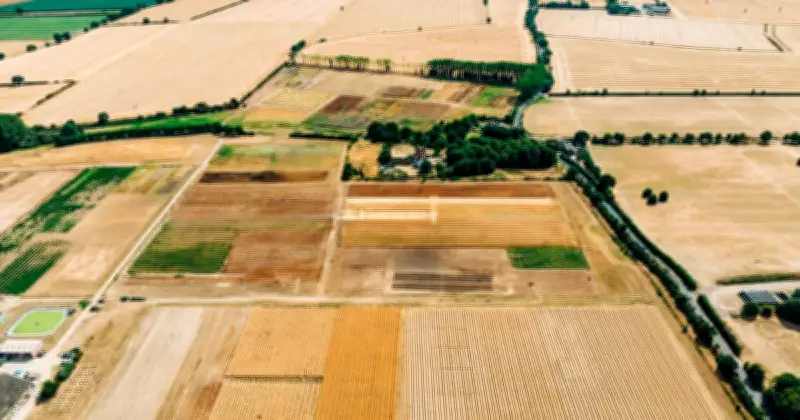
Farmers have issued a dire warning that prolonged hot and dry weather, which has put half of England in drought, could undermine "critical" food security.
Severe drought conditions
Wales and half of England have been plunged into drought by the extreme summer heat, with record-breaking deadly heatwaves in May and June followed by the driest July on record for England and Wales. This has created the potential for the worst harvest on record.
Tom Bradshaw, president of the National Farmers' Union, warned that the "potential crisis" reveals the vulnerability of the domestic supply chain. "We have taken food production for granted for too long," he said. "We must create a more resilient food system to feed the 29million households across the country, and we can't produce food without water."
Impact on farmers
Bradshaw described this as "one of the most severe droughts many farmers and growers have lived through." He noted that harvest yields are looking poor, farmers are struggling to access water for irrigation, and livestock farmers are using spring-cut grass for winter feed because little grass is growing now.
He called for increased government intervention to "ensure food security is treated as a vital part of our nation's critical infrastructure." This includes fast-tracking investment and planning changes to build new reservoirs on farms, and a "common sense approach to water use" with access prioritised for livestock, particularly poultry and pigs.
Cost of reservoirs
Gavin Lane, president of the Country Land and Business Association (CLA), highlighted that farmers "need to spend an average of £45,000 to obtain permissions before they can even begin constructing a farm reservoir." He urged Andy Burnham to streamline the planning and abstraction licensing systems to help farmers build reservoirs before another dry summer turns delay into disaster.
Harvest losses
Analysis by the Energy and Climate Intelligence Unit (ECIU) suggests hot weather over spring and summer could have cut the UK's cereals and oilseed harvest by 2.5million tonnes compared to earlier forecasts. The shortfall could cost farmers as much as £390million, putting the total yield at 19.5million tonnes, overtaking 2020 as the worst since detailed records began in 1984.
Martin Lines, chief executive of the Nature Friendly Farming Network (NFFN), called the extreme weather "a real kick in the teeth." He added, "I've never known it this hot and dry on our farm. Even farmers I know who were sceptical of climate change are now saying they're really worried about the future of their business and production. It's just been completely brutal for our industry."