
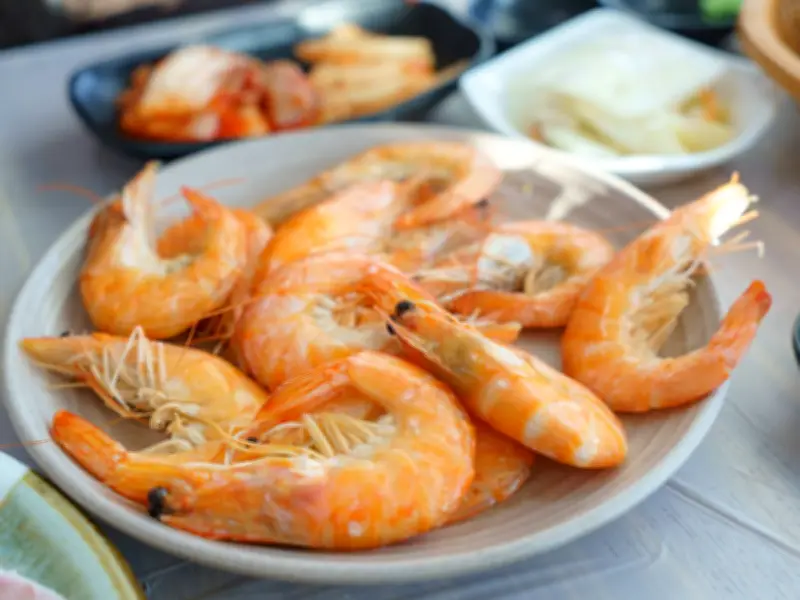
If you've spotted 'shrimp' on a restaurant menu, you may have assumed it was just another word for prawn. But that's not actually the case. While both prawns and shrimp are crustaceans commonly used in dishes, they're entirely separate creatures.
Biological Differences
Both shrimp and prawns are classified as 'decapod crustaceans,' meaning they possess 10 legs and hard outer shells. They also bear a striking resemblance to one another and typically inhabit the floors of aquatic environments.
Shrimp, though, belong to the suborder Pleocyemata family, whereas prawns are part of the suborder Dendrobranchiata.
On closer inspection, prawns have more elongated bodies and branching gills, while shrimp feature slightly shorter, more curved bodies and lamellar gills. Prawns also tend to have longer legs and three pairs of claws, compared to shrimp's two pairs, reports the Express.
Size and Habitat
A frequent misconception is that prawns are always bigger, but this isn't necessarily accurate, as wild-caught seafood naturally comes in varying sizes.
Shrimp and prawns also inhabit different environments. Shrimp are predominantly found in saltwater, while prawns are mainly found in freshwater. That said, both can exist in either type of water.
Reproduction and Flavor
Their reproductive methods differ, too. Shrimp carry their fertilised eggs beneath their bodies under their tails, whereas prawns release their fertilised eggs directly into the water to develop.
When it comes to flavour, there's not much between them. Different varieties of shrimp and prawns do vary in taste and texture, but their flavours are so alike that they can be swapped for one another in recipes without issue.
Common Confusion
To add to the confusion, prawns and shrimp are frequently used interchangeably, particularly in the UK, where both crustaceans are commonly called prawns.
Spot prawns, for instance, are technically shrimp from a biological standpoint, while ridgeback shrimp are in fact prawns. Occasionally, restaurant menus get the labelling wrong, either by mistake or to make dishes sound more enticing.




