
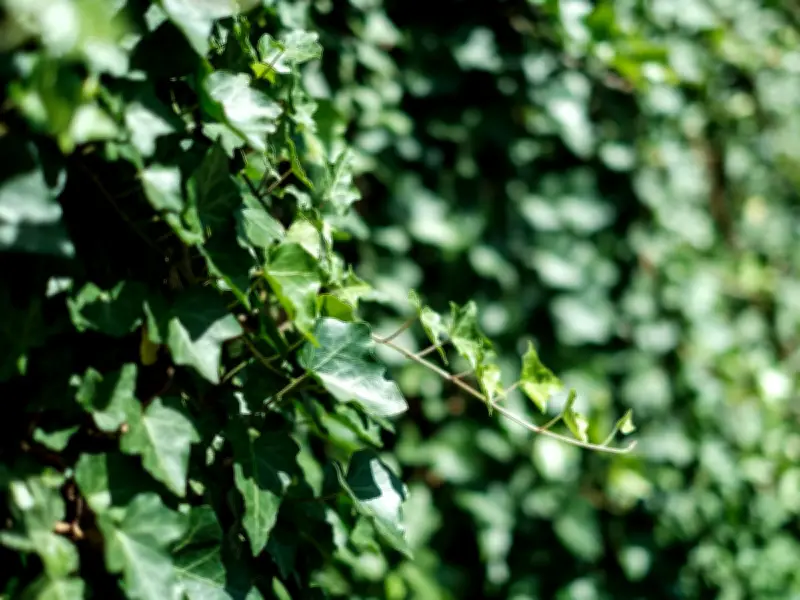
English ivy, a common sight in UK gardens, can quickly become a nuisance due to its invasive growth habits. However, a simple natural solution using white vinegar can eradicate it in approximately five days, according to gardening experts.
Why English Ivy is Problematic
Although native to the UK, English ivy can exhibit aggressive tendencies, especially in mild, rainy climates. It thrives in nutrient-rich soil and tolerates shade, allowing it to outcompete other plants for sunlight, water, and nutrients. Its dense foliage also harbors pests like rodents and insects, while its aerial roots can damage walls and buildings by infiltrating cracks.
The Natural Solution: White Vinegar
John Clifford, a gardening expert from Westminster Stone, recommends a mixture of water and white vinegar in a four-to-one ratio. Simply combine them in a spray bottle and apply generously to the ivy leaves and stems, avoiding the base and soil to protect surrounding plants. Wear gloves to prevent skin irritation.
After spraying, allow the solution to work for about five days. If it rains, reapply and wait additional days. The ivy will gradually turn brown and wither, indicating success.
Removing Dead Ivy
Once the ivy is dead, remove as much as possible. Branches may be brittle and come away easily, or you may need pruning shears. Cut the ivy back to a few inches above ground level, but be cautious—ivy clings tightly. Morris Hankinson of Hopes Grove Nurseries advises digging up the root, which can be large and heavy, requiring a sturdy spade and patience.
Proper Disposal
Do not compost the ivy, as it can regrow. Instead, place the root ball and branches on a weed-proof membrane in direct sunlight to dry completely, then dispose of them in your general waste bin. If concerned about regrowth, spray the root ball with the vinegar solution before disposal.




