
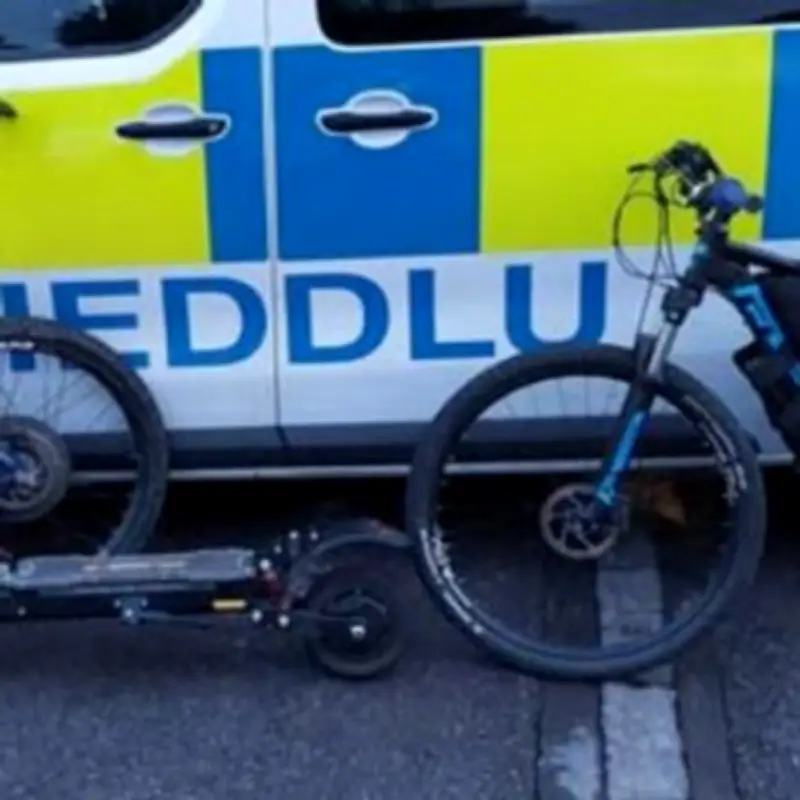
Concerns have been raised about the “absolute nightmare” of e-scooters and e-bikes in Rhondda Cynon Taf, despite a review not supporting more controls. A report was presented to the local authority cabinet on Monday, June 15, in response to a notice of motion agreed by full council in October 2025, which raised concerns around the use of e-bicycles and e-scooters across RCT.
However, a review of the legislative framework around e-bicycles and e-scooters found that while the concerns raised are valid and understood, the current evidence does not support the introduction of additional local legislation at this time. It found that the legal framework already exists, enforcement powers are already in place, and the scale and persistence of the issue locally does not currently meet the threshold required for Public Space Protection Orders (PSPOs) or bylaws.
Deputy leader of the council, Councillor Maureen Webber, said the reason people do not report is because it is a waste of time. She stated that the off-road vehicle organisation group is not up to date with what is currently happening. She described e-bikes and e-scooters as not just a blight on communities but also a serious safety issue. When she tries to report something, she is told to ring 101, but she wants a community-focused police base where she can speak on behalf of people she represents and know that things are being addressed.
She suggested working with the police on an awareness-raising campaign or survey to encourage residents to report issues and get their feedback. She emphasised that the issue in her community was “an absolute nightmare.” “I feel very strongly. If we just let this drift it will get worse and it will increase. We are duty bound. We represent people in some of the most vulnerable areas of Rhondda Cynon Taf,” she said. She attributed non-reporting to apathy, as people get fed up that they are not being listened to or taken notice of.
Fellow cabinet member Councillor Scott Emanuel said he thought the level of perceived ambiguity around the legal stance of these vehicles and the lack of specific classification within police recording has contributed to potential underreporting. Councillor Andrew Morgan said there is an issue with a lack of understanding among buyers that these vehicles are illegal and should not be used in the way they are. He also felt there was a lack of reporting because people do not know who to report to. He suggested a survey for the 75 councillors in RCT about their knowledge of the issue. “There is a problem in RCT. It’s underreported and something needs to be done about it,” he added.
Gary Black, head of community wellbeing and resilience at the council, acknowledged concerns, saying residents can be worried about issues such as dangerous riding, use on pavements, obstruction, and in some cases links to antisocial behaviour. He also mentioned wider concerns around safety including collisions and fire risk from batteries. “These are not issues we dismiss and they do affect people’s perception of safety within our communities. However, it’s important that we respond proportionately and crucially that we base any decision on evidence and a clear understanding of the powers already available to us,” he said.
He noted that the report sets out that there is already a comprehensive legislative framework in place. Electrically-assisted pedal cycles are lawful when they meet strict criteria around power and speed, but where they do not meet those standards, they are already classified as motor vehicles and subject to existing road traffic legislation, requiring registration, insurance, and a licence. Privately owned e-scooters are already illegal to use on public roads and pavements outside of approved trial schemes, and RCT is not an approved trial scheme.
In terms of enforcement, police can deal with dangerous or careless cycling, seize vehicles used in an anti-social manner, and take action where vehicles are uninsured or used illegally. Mr Black said across the last financial year, there were 65 road-related antisocial behaviour incidents recorded in RCT, representing around 1% of all antisocial behaviour incidents. He also said they had received no formal complaints to the community safety team specifically relating to e-bikes or e-scooters, and the trading standards team had received no reports concerning product safety. However, he acknowledged that this does not necessarily mean there are no issues and may reflect underreporting or a lack of awareness about how to report concerns. “But it does mean that at present we do not have a strong or consistent evidence base demonstrating a widespread or persistent problem at the level that would justify additional legislative controls.”
The council has also explored alternative options such as public space protection orders or bylaws, which require a high evidential threshold. Mr Black said based on the data and professional judgement of the police, that threshold is not currently met. “Introducing such measures now would risk duplicating existing legislation without delivering any additional practical benefit.” He said the evidence supports continuing and strengthening the partnership approach and that alongside enforcement there is a role for improving public awareness so residents understand what is legal, what is not, and how to report concerns effectively. He concluded: “While the concerns raised are valid and understood, the current evidence does not support the introduction of additional local legislation at this time. It is important we continue to work with our partners to monitor the situation closely, strengthen our intelligence, and ensure we are ready to act if the evidence changes.”




