
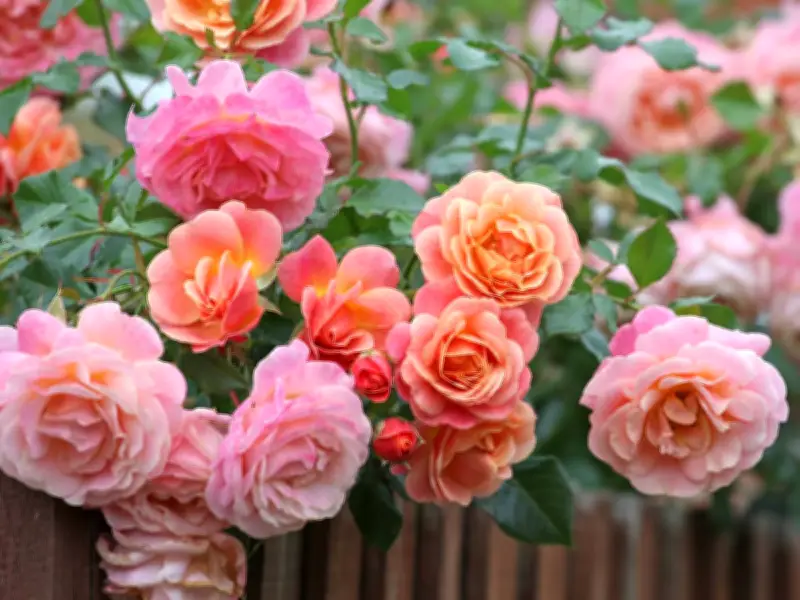
Roses can produce more blooms this summer with a simple overlooked task that gardeners can do now. There's an easy job that encourages roses to keep growing bigger and better flowers throughout the season.
The Key to More Blooms
Roses are timeless and stunning flowers to cultivate, adding colour to any outdoor space. Gardeners may have noticed their roses already flowering, and there's a straightforward task to help the plant produce larger and more impressive blooms through summer and into early autumn.
All gardeners need to do is give their roses a little trim, known as deadheading. This process is remarkably simple and won't take much time.
However, gardening expert and TikTok creator Michael Griffiths suggests many gardeners are deadheading their roses the wrong way.
Two Steps to Deadheading
It's not just about cutting off faded and drooping rose heads. There's a second stage that many people miss, which prompts roses to produce more flowers.
In a recent video, Michael said: "Do you know there are two steps to deadheading roses, but most people stop at step one."
The first stage is to remove roses that look worse for wear. Gardeners should identify spent blooms that are wilted or losing colour. Simply snip away the rose head at the base where it meets the stem. This can be applied to individual spent blooms while leaving remaining flowers intact.
Michael explained that the second stage is crucial for encouraging roses to flower repeatedly throughout summer. If you have a cluster of roses, locate where it ends, then trace the stem downwards to find the next set of five leaves—it must be five. Cut the stem just above this cluster to redirect energy away from past-their-best flowers and buds.
Michael said: "Now you have a stronger bud which encourages more flowers." Allow buds to bloom until spent, then deadhead above the five leaves. A thorough pruning isn't necessary until later in the year.
Additional Benefits
On occasion, individual roses can be deadheaded by pinching off the spent bloom. An added benefit is that deadheading lowers the risk of fungal infections. The sooner you deadhead, the quicker new blooms emerge, as energy is redirected to buds. Deadheading also keeps rose bushes neat and tidy.
The Royal Horticultural Society advised regular deadheading regardless of the time of year. The RHS said: "Gently snap the faded flowers off hybrid tea roses, breaking the stalk just below the head. This method encourages more blooms more quickly compared to cutting with secateurs. For other roses, snip off individual flowers or clusters down to just above the next leaf."
The RHS also offered a tip to prevent rose petals from dropping too soon: "The petals of rose flowers become loose as they age, so to prevent them going everywhere when you deadhead, cup each flower in your hand before you cut through the stalk."




