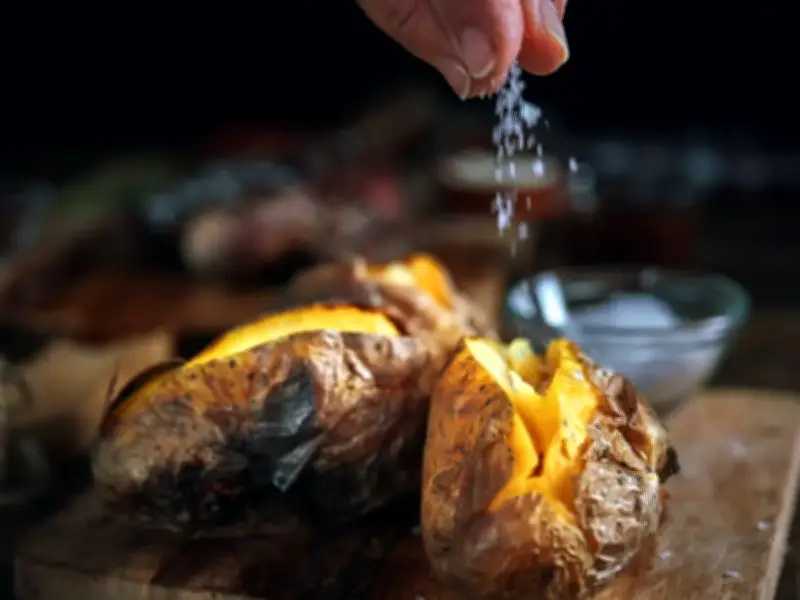
Baked potatoes make for an ideal midweek meal, largely because they are straightforward to prepare. Yet without the right technique, they can easily turn out shrivelled and soggy.
What many people fail to realise is that potatoes have a notably high water content, which converts to steam during cooking and keeps the skin soft. Wrapping potatoes in tin foil is a widely used method, with many believing it helps crisp up the skin — but in reality, it simply traps moisture and leaves you with a soggy result.
The secret ingredient revealed
Culinary-trained chef and founder of The Silly Girl's Kitchen, Dana DeVolk, has revealed that achieving perfectly crispy baked potatoes is far simpler than you might think, requiring nothing more than salt.

Dana said: "Coarse kosher salt is the secret to the signature crackly skin. The big flakes draw moisture out of the skin as it bakes, leaving a crust that snaps when you cut in. Table salt works but the texture is finer and the crust is less dramatic."
While using salt may seem straightforward, many people make the mistake of seasoning their baked potatoes after cooking, by which point it has little effect. Applying salt beforehand will yield a far superior texture.
Why salting before baking works
Salt's absorbent properties help draw excess moisture from the potato, keeping the skin as dry as possible throughout the cooking process. It also prevents steam from softening the potato and ensures the olive oil can do its job properly, resulting in a far crispier, crackling skin. Salting your potatoes in advance will not only help achieve a far superior texture, but will also add considerably more flavour to the skin, making for a much more satisfying baked potato overall.
Choosing the right potato and method
It is worth noting that the variety of potato you choose makes a significant difference. Certain types are too high in water content and will release excessive amounts of steam during cooking. When shopping at the supermarket, look out for potatoes labelled Maris Piper, King Edward or "good for baking", as their lower moisture content will give you a far crispier skin.
Per person, you will need one potato, half a tablespoon of olive oil, one and a half teaspoons of kosher salt, and any of your favourite toppings. If you are unsure about toppings, consider butter, sour cream, spring onions, bacon, cheddar cheese and, naturally, a generous helping of black pepper.
Begin by preheating the oven to 200°C, scrubbing the potato under cold running water before drying it thoroughly with kitchen paper. Line a baking tray with greaseproof paper, place the potato on top and pierce the skin all over with a fork. Steam can accumulate inside potatoes during cooking, potentially causing them to burst in the oven, so piercing the skin allows it to escape safely.
Drizzle the olive oil over the potato and season with salt. Gently roll the potato across the tray until the skin is evenly coated, then transfer to the oven. Bake the potato for approximately one hour, or until a knife can be inserted into the skin with ease. Once cooked through, slice across the top and gently squeeze the sides to open it up. Use a fork to fluff up the flesh before piling on your preferred toppings. The result will be a perfectly golden baked potato, packed with flavour — and not a sheet of tin foil in sight.