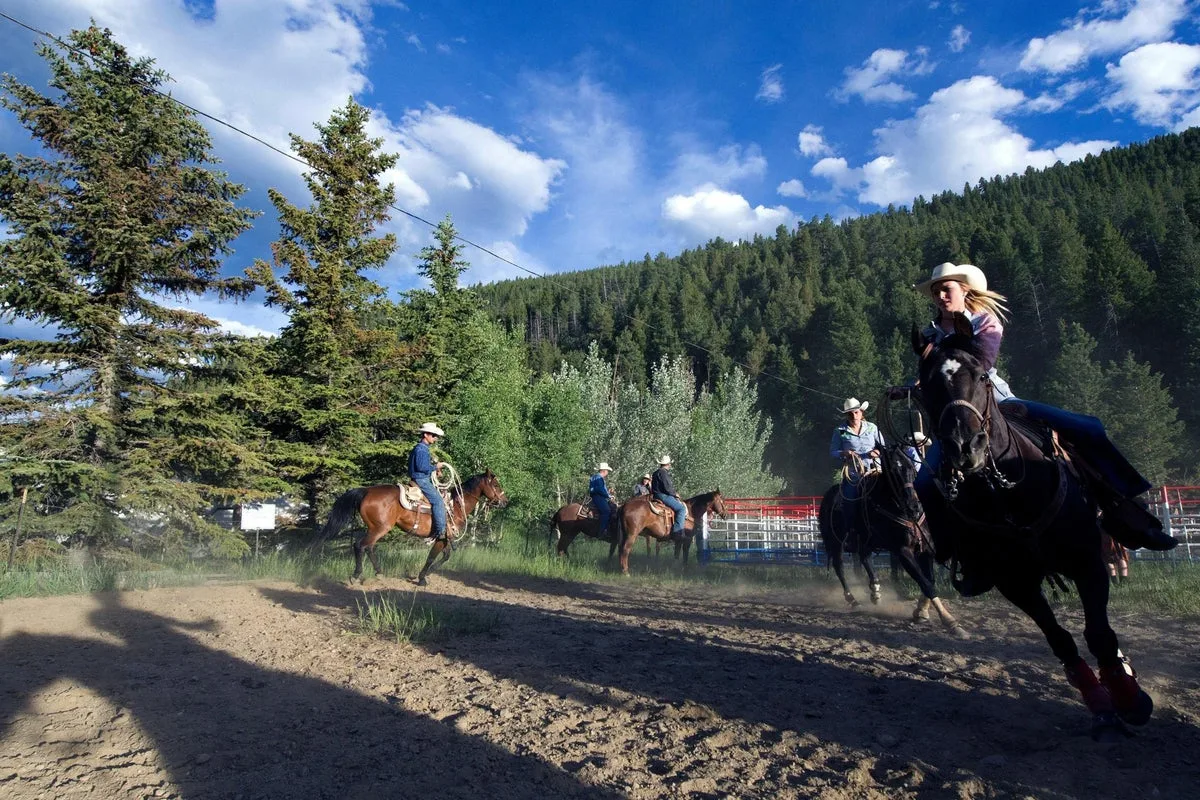
Female ranchers are reclaiming their historic connection to the land in the United States, as mechanisation and technology reduce the emphasis on physical strength in favour of business, animal husbandry, and environmental stewardship. According to the United States Department of Agriculture, 14 per cent of the nation's 2.1 million farms had a female proprietor in 2012, a figure expected to rise as over half of farms and ranches change hands in the next 20 years.
In Kremmling, Colorado, Caitlyn Taussig, 32, runs the family ranch with her mother and sister, relying on men only for branding cattle. “There’s less ego,” she says after a cow kick splits her forehead open, requiring six stitches before she returns to work that afternoon. Women are leading the trend of sustainable ranching, raising grass-fed cattle in humane, ecological ways.
Kelsey Ducheneaux, 25, raises sustainable beef on Lakota Nation land in South Dakota. “We believe that we can only be as sovereign as a nation as we are in our food systems,” she says. For Native Americans, women working the ranch is a return to a matriarchal tradition. “She was the actual rock of the family,” Ducheneaux says of her grandmother.
Beth Robinette, 31, runs the Lazy R Ranch in Washington and founded New Cowgirl Camp, a five-day course in animal husbandry, ranch management, and regenerative grazing. She calls it a “rhinestone-free zone”. “Our current generation of land managers is aging out,” she says. “You could look at that as a disaster, or as an opportunity to change the paradigm.”
Cory Carman, 39, turned her family's Oregon ranch into a leading provider of grass-fed beef. A Stanford graduate, she recalls being told, “You don’t look like a rancher.” But that judgement proved liberating: “If I don’t look like a rancher, I don’t have to act like one all the time.”