Jeremy Clarkson has revealed that Kaleb Cooper is giving him the cold shoulder after his latest scheme at Diddly Squat Farm, growing flax, turned into another disaster.
After being told there was no point trying to grow wheat or barley at his farm, Clarkson has been exploring alternative crops. Among his various "harebrained schemes," he tried breeding rabbits, convinced it would be straightforward given that rabbits would multiply rapidly and prove manageable, but he quickly discovered the reality was quite different.
"It turns out that rabbits don't breed like rabbits," Clarkson explains. "They breed like pandas. It's nigh-on impossible to get them to have sex and even if you manage it, the ladies rarely get pregnant. Also, rabbits are extremely vicious, which is a problem if, like me, you're on blood thinners."

Herb cultivation falls short
Similarly, an ambitious venture into herb cultivation, which promised substantial returns, fell rather short of expectations: "For the most part it was all a waste of time because what we've ended up with is a ton of parsley, a handful of coriander and a lot of dead thyme," Clarkson said.
Another farming innovation Clarkson tried was the cultivation of flax — a crucial ingredient in linen shirts and, perhaps surprisingly, Formula One cars. However, growing the crop proves to be a remarkably complex undertaking.
Clarkson explains in the Sunday Times: "Unlike any other crop, you let the grain fall on the ground and harvest the stalks. But you don't cut them as you would with wheat or barley. You rip them up by the roots, which requires the use of an enormous machine that can only be described as an industrial accident that hasn't happened just yet."
Manual labour leaves Kaleb unimpressed
Once the specialist flax-harvesting machinery has completed its work, a considerable amount of gruelling manual labour still remains. With the majority of his farmhands occupied elsewhere, Clarkson found himself turning to his closest crew — a decision that left one of them distinctly unimpressed.
He said: "It was down to Lisa, Kaleb and me to scoop up the stalks into a stook and tie each one with a bit of string, as though we were living in an Enid Blyton novel."
The labour proved gruelling, and within a few hours it became abundantly apparent that cultivating flax wasn't quite the stroke of genius Clarkson had initially envisaged: "Kaleb ... is not talking to me," Clarkson reveals. "He says I've got to stop coming up with harebrained schemes without thinking them through."
Farmers face climate challenges
Following the flax harvest's collapse, he concluded: "It looked like flax was up there with the thyme and the rabbits as another Diddly Squat disaster."
Farmers throughout the UK are, much like Clarkson, reassessing how they manage their land. Charlie Taverner, policy lead at the Food, Farming and Countryside Commission, told the Independent: "Climate change has become a constant reality that our farmers are grappling with - they're at the forefront of this all.
"But while we're seeing an awful lot of apprehension, we have to see the opportunity. Some crops that we could never even imagine growing here are now becoming viable."
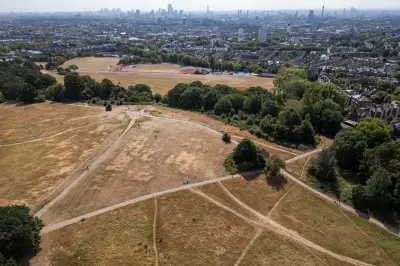
Sweet potatoes, sweet peppers, artichokes and chillies are amongst the crops now emerging as realistic options for British farmers, while chickpeas and lentils could become increasingly feasible as summers grow hotter and drier.
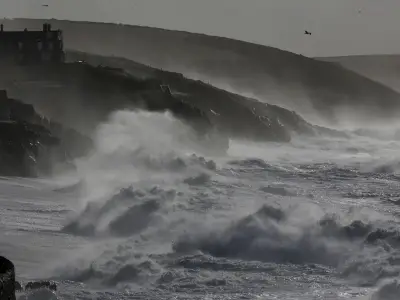
However, farmers must prepare not only for sweltering summers but also for considerably wetter winters. Professor Carol Wagstaff, director of Agrifood Futures at the University of Reading, cautions that Britain's weather isn't simply getting hotter, it's becoming more extreme: "It's naïve to think that because we're having temperatures similar to Spain's right now, that we can now just grow what is grown there," she says.
"We simply can't because we won't have those same year-round temperatures."