British Christmas tree farmers fear that this year's heatwaves and extreme weather will reduce the number of trees available to buyers in future years. Experts have said that saplings and young trees have been most at risk, with farmers reporting thousands dying over the hot summer months.
Since the typical age of trees sold this winter is five years old, the effects of this summer's heatwave on the industry will not be fully felt for several years. West Midlands farmers said they were already changing when they plant trees to adapt to the new, extreme weather patterns the UK experiences.
Farmers report significant losses
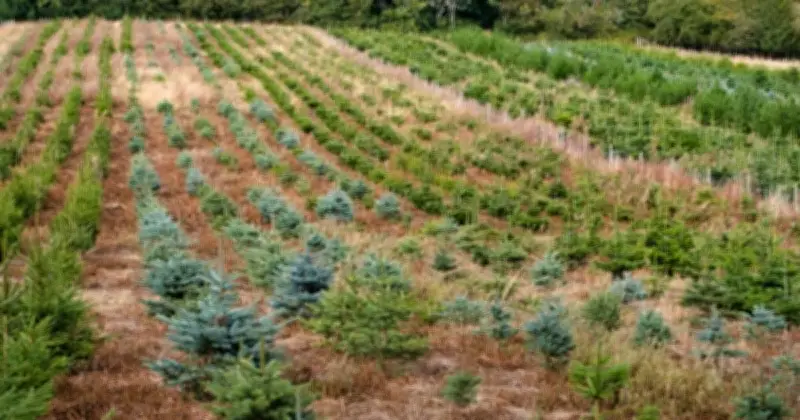
Ollie Simpkins, co-owner of Warwickshire Christmas Tree Farm near Shenington, said it had been "a tough couple of years for growing", adding: "We lost half of the saplings we planted last year due to the heat." He told the BBC that this year his farm planted 7,500 trees and lost 5,500, plus another 1,500 from those planted last year, despite pumping up to 20,000 litres of water a day onto the trees, which was ultimately "unsustainable".
Like some other tree growers, Simpkins has looked at switching planting from March to October to allow plants to grow in cooler weather, and fears the effect of the weather was unlikely to be seen in the next couple of years.
Meurig Rhys-Jones, manager of Oswestry Christmas Tree Farm at Pentreclawdd Farm, said: "Everybody's very cautious of how much to plant." He said the larger, more mature trees were able to cope with extreme weather, but the smaller ones were not. "If you've got a young sapling that hasn't got an established root system, if it's dry it's going to die," he said. He predicted the effects would be seen in seven or eight years' time and there was "not a great deal we can do".
Quality concerns for this year's trees
Despite this, Rhys-Jones believed his farm would cope and said demand for real trees continued to grow every year. Jonathan Allan, who grows trees at Holly Farm garden centre near Whitchurch in Shropshire, said his trees had taken "a big beating" this summer. On one patch with light, sandy soil that did not hold much water, he had lost 90% of his trees due to the "relentless heat".
Mr Allan said: "We're going to have a gap in production in three, four, five years' time. In another field, where the ground is clay-based, the ground has been able to hold more water." But he added that if there was another spell of especially wet weather, those trees would be under threat more than those in shallow soil. "It's tough," he said.
Matt Adams, from Duckswich Christmas Trees near Worcester, said while numbers were not a problem this year, he was concerned about the quality of trees going on sale. "We've had such a severe drought the trees are stressed," he said. That could mean that once the trees are cut they are unable to hold onto their needles as well as expected.
Industry adapts to changing climate
Adams started growing Christmas trees in 2015 "as a bit of a trial" and said farmers were facing a difficult choice, with irrigation only available to those with "deep pockets". Russell Parkins, who chairs the British Christmas Trees Growers Association, reassured those who love a real tree at Yuletide not to panic.
He stressed: "Growers are continually adapting their practices, and we're seeing more autumn planting to help young trees establish strong root systems over the winter months." He also said Christmas tree farmers were "all aware that the world is changing" and there was "ongoing research on provenance selection" - such as breeding from trees native to other parts of the world, including Turkey, to create plants better able to cope.
Extra spending on measures such as irrigation was less likely, though, and he said it "would be a difficult one just because of the cost that's involved", but he agreed effects of the hot weather this summer were likely to be seen "six to ten years down the road", yet saw hope for the future. He said the expertise and commitment of his members would mean consumers would "continue to enjoy high-quality British-grown Christmas trees for many years to come".