
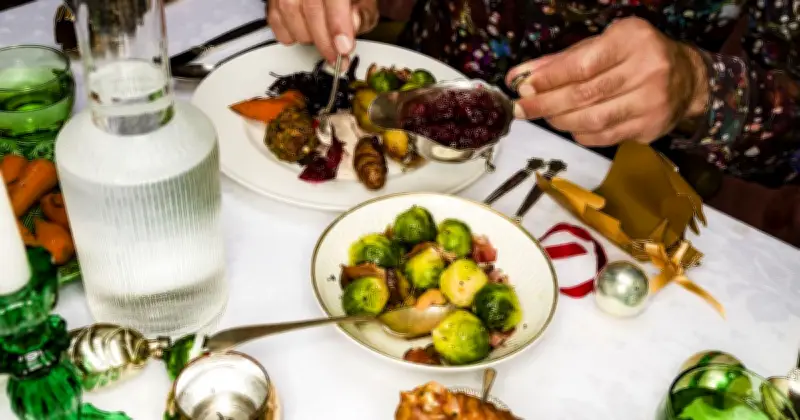
Half of England was officially confirmed to be in drought this week as the UK buckles under record high temperatures, following an extremely dry July, a dry spring and successive heatwaves that have put water resources under pressure. Farmers have now warned that traditional Christmas vegetables, including potatoes, parsnips and Brussels sprouts, could be at risk.
Potato, parsnip and sprout crops under threat
Jeremy Oatey, 59, a potato farmer based in Cornwall, said the length of the dry spell would determine whether there is a shortage. “We haven’t had a long dry spell like this for a long time,” he said. “I wouldn’t say there’s going to be a major potato shortage at the moment, but it really depends on how long the weather stays like this.”
Oatey added: “The potatoes we produce are also likely to be a bit smaller and more misshapen because of the heat. They’ll taste the same, but they might look a bit different.”
Alan Stevens, 60, who farms sprouts and other seasonal vegetables on the east coast of Scotland, said changing weather patterns forced him to harvest some crops early last year. “Farmers have always had to deal with unpredictable weather, but climate change is bringing extremes of all different kinds,” he said. “It makes it hard to plan ahead, which you really need to do in this line of work.”
Luke King, director of supply and technical at organic vegetable company Riverford, said root crops were most likely to be in limited supply by December, particularly potatoes, carrots, parsnips and swede. “Many root growers have limited irrigation, so the dry and hot conditions can significantly impact the crops and reduce yields,” he explained. “That won’t necessarily mean empty shelves, but it could mean tighter supplies and higher prices.”
Price rises more likely than empty shelves
Oliver Morrison, agricultural expert and editor of AgNavigator, said price increases were more likely than bare shelves at the end of the year. “Unlike salad vegetables, where Britain heavily relies on imports, traditional Christmas staples like potatoes, Brussels sprouts and parsnips are largely home-grown, so the dry weather may impact prices,” he said.
Morrison noted that potatoes eaten at Christmas are planted in April and May and harvested in September and October, largely in East Anglia and Lincolnshire, among the driest and most water-stressed regions in the country. “Potatoes require constant moisture while tubers are developing and drought can result in fewer potatoes per plant, smaller tubers and a greater incidence of defects such as cracking and misshapen growth,” he added. “These quality issues can reduce the proportion of the crop that meets supermarket specifications.”
He also warned that Lincolnshire is a major centre of UK Brussels sprouts production, with dry weather likely to reduce the size of the vegetable and its ability to grow. Parsnips, primarily grown in the Norfolk Sands, the Fens and Nottinghamshire, are normally sown between March and May and harvested from October onwards. “As with potatoes and sprouts, water stress during summer can produce smaller, forked or misshapen parsnip roots, reducing the amount of saleable crop,” Morrison said. “Cold weather actually improves their flavour by converting starches into sugars. So your parsnips might be less sweet this Christmas as well as more expensive.”
Worst harvest in years
Gavin Lane, president of the Country Land and Business Association (CLA), which represents 28,000 farmers, said many have told him 2026 is their “worst harvest in years”. “A sodden winter followed by drought has left wheat at half its usual height and some crops not worth harvesting,” he said.
Lane called for government intervention to help farmers adapt to extreme weather, including investment in irrigation and other systems to bolster resilience. “This is the third drought in five years,” he added. “What was once extraordinary is becoming part of farming in Britain, and government must start planning for it.
“We know that proper investment in resilient farming systems, from reservoirs to wildfire prevention, could help farmers cope with these new extremes. Farmers have shown again and again that they can adapt and deliver solutions, but resilience has its limits. If we want them to keep feeding the country, they need proper support. Otherwise, this harvest could be their last.”




