
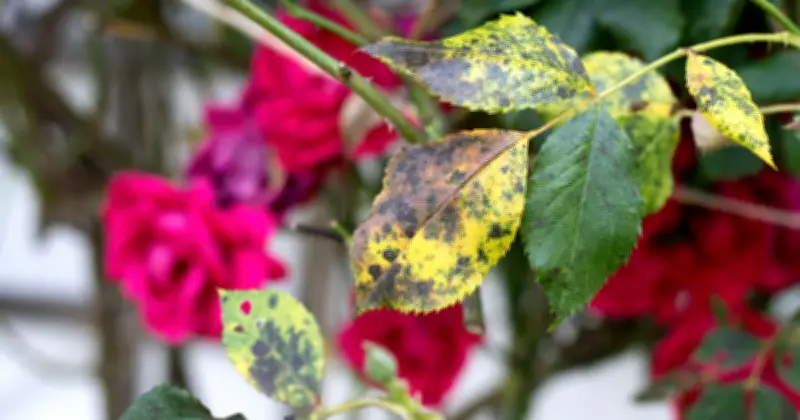
Gardening expert and TikTok creator Michael Griffiths has urged gardeners to check roses for black spot now, before temperatures drop, and to remove any affected foliage. The fungal disease, if left untreated, can cause plants to lose all their foliage and ultimately die.
Why autumn is the time to act
Autumn is the best time to get on top of garden maintenance, especially as the blooming season winds down. With the change in climate, gardeners could face a number of issues, and rose black spot is a particularly harmful problem for flowers, especially roses.
According to the Royal Horticultural Society, if leaves are infected, the marks usually appear in spring. These markings persist over time and can ultimately damage plants. Alongside purple and black spots, other symptoms include yellowing of leaf tissue, leaf drop, and small, black, scabby lesions that may appear on young stems. Signs of powdery mildew may also be found.
How to remove and treat black spot
If the fungal disease is in an isolated area, such as the leaves or a few petals, Michael demonstrated that you can simply pluck and pinch the affected areas off by hand. Alternatively, you can use a pair of secateurs to remove them, and the secateurs should then be washed thoroughly to reduce any risk of spreading the disease.
Any affected leaves on the ground should be picked up and disposed of immediately, to stop the disease spreading into the grass and soil. Anything picked up or picked off must be destroyed; it should not be put in the compost heap. To prevent the disease recurring, gardeners should prune plants or flowers to reduce the chances of mould, mildew and black spot taking hold, water deeply so the plant doesn't get stressed, and mulch to around three inches, locking in water and suppressing weeds.
Dealing with severe infections
If the disease is particularly bad, flowers and plants may lose all of their foliage. If the black spot has spread across the plant, more decisive action may be needed.
Gardening expert Ish advised using a baking soda solution to eliminate the fungal disease. In a spray bottle, add one teaspoon of baking soda per 500ml of water. Mix the solution well and spray plants very lightly once a week if they are suffering from powdery mildew or fungal infections. Lightly mist the plant every week or so, and the solution should clear the black spot. This natural antifungal spray can help target mould.




