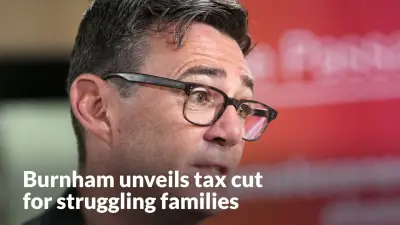
Andy Burnham’s plans to put academic and technical education on an equal footing in England have been welcomed by many, but none more enthusiastically than former Conservative minister Kenneth Baker. The 91-year-old former education secretary told the Guardian: “I’m very impressed with what he has said. It’s a very significant announcement. I’m going to try to persuade the Conservative party to support this.”
Shared vision for technical education
Lord Baker and Burnham belong to different generations and parties, but at a time when a million 16- to 24-year-olds are not in employment, education or training (Neets), they share a vision for a school system where technical and vocational skills are valued as much as academic qualifications.
The prime minister’s plans for schools to develop technical and vocational courses for students aged 14 and above, responsive to local jobs markets, are partly based on the Greater Manchester baccalaureate (MBacc) he introduced as mayor in 2023. The inspiration for the MBacc lies in Baker’s long-standing vision for high-quality vocational education via university technical colleges (UTCs).
UTCs as a model
First introduced by the coalition government in 2010, UTCs are state schools for 14- to 19-year-olds, funded by government and working with local employers and universities to deliver specialist technical education alongside core subjects. Baker is president of the Baker Dearing Educational Trust, which oversees England’s 44 UTCs. While they have faced challenges—some struggled with recruitment, several closed, and Ofsted inspections have not always been positive—if success is measured by how few pupils end up Neet, they look successful.
According to Baker, UTCs today have the lowest youth unemployment of any school group—less than 5%, compared with 16.4% in state secondary schools. “I’m very proud of the fact that last year half of our schools had no unemployment,” said Baker. “Every student went on to further education, or a university or a job. It’s an exceptional achievement.” He added that starting a technical route at 14 is key to success: “It’s too late to do it at 16.”
Implementation and concerns
Walney School in Barrow-in-Furness will this September introduce an employer-led technical education pathway—a UTC “sleeve” within the school—to equip young people with skills for healthcare and engineering careers, and help local employers tackle skills shortages. To make this national, classrooms would have to be converted into workshops. In one UTC with a health specialism, rooms have been converted into a hospital ward and pharmacy. Costs could be high.
School leaders and teaching unions, reading about Burnham’s plans on their summer break, are worried about the lack of detail and whether funding will be available. Budgets are already tight, and schools face an avalanche of policy reforms. Matt Wrack, general secretary of the NASUWT teachers’ union, said: “Currently, schools are under significant and increasing financial pressure. They are being asked to do even more with even less. No successful and sustainable package of change is deliverable in such circumstances and the prime minister must take action to invest in education if the aims of this announcement are to become a reality.”
Others worry about the impact on disadvantaged children. Shadow education secretary Laura Trott posted on X: “Labour is repeating the mistakes of the past. They previously tried this approach of more ‘vocational’ courses at GCSE. What happened? The poorest children got funnelled down them, standards dropped and outcomes did not improve.”
Analyst perspectives
Tom Richmond, an education policy analyst and former Department for Education adviser, echoed her concerns. He posted on LinkedIn: “One of the biggest challenges will be making sure these new ‘technical pathways’ do not become a dumping ground for ‘those who can’t’. Who will choose whether a pupil pursues a technical rather than an academic pathway? The pupil? Parents? Schools? We’ve seen enough from dodgy practices around admissions at age 11 to know that some schools have developed a knack of, shall we say, encouraging some pupils to attend other schools. Many UTCs initially struggled with being a dumping ground for the kids that other schools didn’t want (although that has changed over time).”
The Institute for Fiscal Studies (IFS) raised concerns about getting employers involved. Imran Tahir, senior research economist at the IFS, said: “Getting employers to engage with designing – and perhaps helping to deliver – training programmes will be vital to their success. Recent experience with T-levels shows how challenging it can be to secure their involvement in delivery.”
Marc Doyle, CEO of the Quest Trust, which includes the University Collegiate School, a UTC in Bolton, is sanguine. “I’ve always been a huge believer in the power of technical education to improve life chances. It’s been music to my ears listening to Andy Burnham’s announcement. In Bolton we are part of the MBacc delivery group. All of a sudden the rest of the world is starting to catch up.”