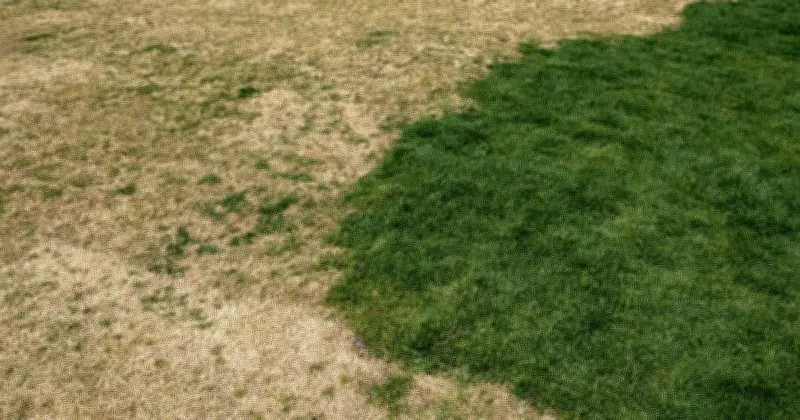
In the past couple of months, the UK has been hit with heatwave after heatwave as several parts of the country reached record-breaking temperatures. On top of that, over two-thirds of England and the whole of Wales have officially been declared to be in drought.
As a result of the scorching temps and extreme dry weather, all over the nation, lawns and gardens have also felt the effects of harsh natural elements. Carefully tended-to lush green lawns are now looking yellow-brown and lifeless.
Now, as the weather starts to cool after weeks of continued high temperatures, small pockets of the UK are finally seeing the first signs of rain. While the sound of rain pattering on your scorched brown lawn may feel like a cause for celebration, it may still take some time for your garden to return to its former glory.

In fact, it’s important not to immediately panic, lose hope, or reach for fertiliser in a bid to restore lawns and gardens to their previous lush and verdant appearance.
Why brown lawns can recover
DIY Garden explains: “Depending on your grass type and the severity of the drought, much of that brown lawn may be dormant rather than dead. Dormancy is a survival mechanism that allows established turfgrass to conserve resources during prolonged heat and water stress.”
Matt J Adams, founder and lead gardener at The Relentless Gardener, adds: “Don't panic if your lawn has turned brown after a heatwave. As temperatures return to normal and rainfall increases, most lawns will begin to recover naturally. Avoid using high-nitrogen fertilisers on stressed grass, as these can do more harm than good. Patience is key. With the right care, most lawns will bounce back within a few weeks.”
Resume mowing gradually
Peter Chaloner, Managing Director of Cobra Garden, says: “Brown patches, slower growth and dry, compacted soil are all common after a heatwave, but most lawns will bounce back with the right care.
“Be gentle and resume mowing gradually rather than shocking the lawn with a heavy cut, keeping the blades set a little higher to avoid putting unnecessary stress on recovering grass. As growth returns, regular mowing at this raised height will encourage the lawn to thicken up while allowing the grass to rebuild its strength.”
Adopt the right watering technique
Matt advises: “Water smarter, not harder. A thorough soak every few days is much more beneficial than a light sprinkle every evening. Deep watering encourages the roots to grow further into the soil, making the lawn better equipped to cope with the next dry spell.” The expert gardener recommends watering gardens and lawns early in the morning or later in the evening, so that scorching the grass can be avoided and evaporation can be minimised.
Peter has a similar suggestion: “Continue to water deeply but less frequently while the lawn recovers, encouraging roots to grow further into the soil where moisture is available for longer. If some areas are still brown, don't be too quick to replace them. Grass often enters a dormant state during prolonged heat and, given time and the right conditions, many lawns will recover naturally over the coming weeks.”
Apply a gentle feed and liquid seaweed
Matt says: “Give your lawn a fresh start once the weather cools. When temperatures return to normal, if there are any thin or bare patches, lightly rake out dead material before overseeding to help the new grass seed (especially if it’s shaded grass seed) make contact with the soil to encourage germination. Keep the area consistently moist until the new grass is established.”
He adds that once gardeners can see that their lawn has started actively growing again, a gentle, drought-friendly feed needs to be applied. This is so that the grass’ lost nutrients can be replenished and green growth can be encouraged.
Matt explains that it’s imperative to “feed to replace what the lawn has lost”. Since heat and drought have the tendency to leave lawns depleted of nutrients, it’s important that once the worst of the hot weather has passed and the rain returns, a quality slow-Nitrogen-releasing lawn fertiliser be applied so that essential nutrients can be replenished and lush healthy growth can be encouraged.
“Always follow the application instructions and avoid feeding if the soil is still extremely dry,” Matt adds.

He continues: “Use liquid seaweed to reduce stress and aid recovery. Seaweed helps condition the soil, encourages stronger root growth, improves nutrient uptake and reduces stress caused by hot, dry weather.”
The gardening specialist recommends regular applications of liquid seaweed as they can help futureproof lawns by “supporting a healthier root system and improving the grass's ability to retain moisture”.
Matt shares: “Healthier, greener grass is naturally more resilient to heat stress, stays greener for longer during dry spells and recovers more quickly once temperatures return to normal.”
Peter adds that it’s crucial to adopt ‘drought-resistant mowing practices’, as they can help lawns cope better with ‘future periods of extreme weather’.
Peter advises: “Using a mulching mower is a simple but effective way to improve moisture retention, as the finely chopped grass clippings are returned to the lawn, helping the soil hold onto moisture to make it stronger for any future heatwaves.”