
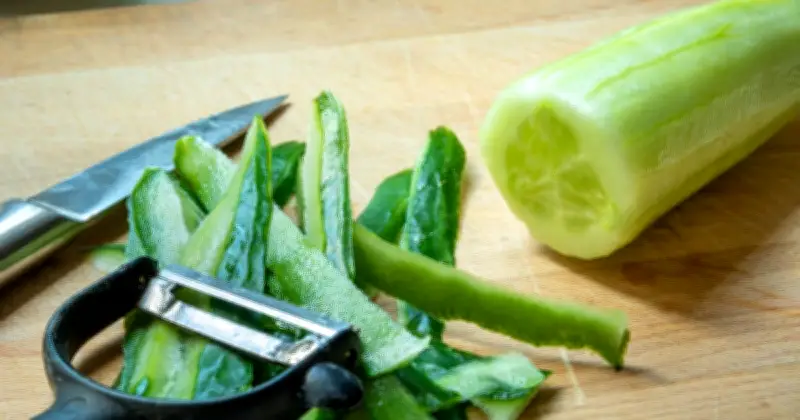
As scorching weather is forecast to hit the UK this weekend, Brits are being encouraged to place cucumber peelings in their gardens. According to meteorological forecasts, temperatures are set to soar across swathes of the UK this weekend, especially across the south and south-east of England, where an advancing 'heat dome' from the Continent is bringing possible heatwave conditions. The mercury is predicted to rise steadily throughout the week, climbing into the high 20s and potentially hitting 32°C across southern England by Sunday.
Yet as soon as the temperature begins to climb, so does wasp activity. Whether it is a barbecue, al fresco drinks or an outdoor family meal, it often feels as though wasps possess an uncanny ability to detect food the moment it emerges. Many people search online for tricks to repel wasps or resort to sprays and traps to ward them off. Meanwhile, others are experimenting with a far simpler method using something they would typically discard straight into the bin – cucumber peelings.
It may sound rather unusual, but cucumber peelings have been associated with deterring wasps for years. The theory is that wasps particularly dislike the scent emitted by the peel, making them less inclined to linger in areas where people are dining and socialising. According to DIY specialist Glen Peskett from Saxton Blades Multi Tools, cucumber peelings are a remarkably popular summer trick for those attempting to keep wasps away from their outdoor spaces.
'Every summer, people seem to have a different trick for keeping wasps away, and cucumber peels are one that comes up quite a lot,' says Glen. 'The thinking is that wasps are not too keen on the smell from the peel. It is not going to work miracles, and it will not help much if you have got a nest nearby, but some people find it helps stop wasps hanging around outdoor seating areas quite as much.'
It is far from a foolproof solution, but if you happen to have leftover cucumber peels to hand, there is little reason not to give it a whirl. Should you wish to try it out, simply scatter a few fresh cucumber peels around your patio, garden table, or wherever wasps tend to congregate. Swap them out periodically once they begin to dry up. The method is most commonly deployed around areas where people are dining and drinking outdoors, as these tend to be the biggest wasp hotspots during the warmer months.
If cucumber peels seem a touch unconventional, the technique can easily be combined with other well-known habits that help deter wasp activity: keeping sugary drinks covered when outside, clearing away food scraps as soon as possible, wiping down outdoor tables after use, making sure bins and recycling containers remain closed, and avoiding leaving sweet foods exposed for long periods.
'People often look for quick fixes, but the biggest thing is keeping food, drinks and rubbish under control,' Glen explains. 'That is what usually attracts wasps in the first place. The cucumber peel trick is just a simple extra that some people swear by.'
While it may not deter every wasp from appearing, for something that would typically be thrown away, it is a straightforward enough method to attempt.




