
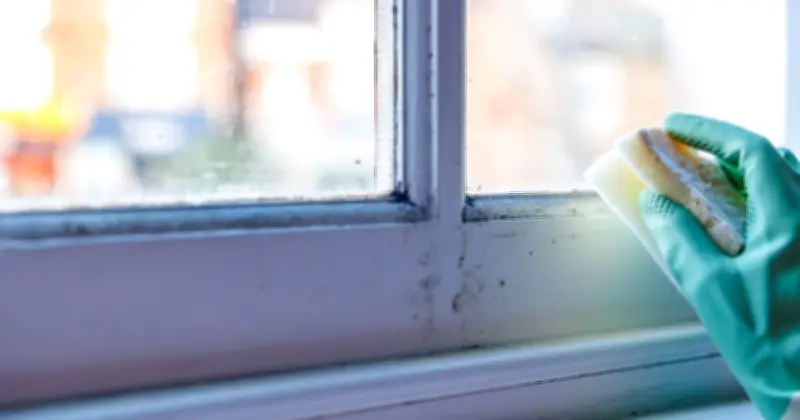
Spring is a peak season for mould growth due to frequent showers and rising humidity. By Claire Schofield 15:28, Thu, Jun 11, 2026 Updated: 15:37, Thu, Jun 11, 2026
Tea tree oil is a natural antiseptic and disinfectant that can remove and kill black mould (Image: Getty)
The spring season is known for its unpredictable weather and unfortunately its combination of rising temperatures, frequent showers and high humidity creates the ideal conditions for mould to thrive. While mould growth is normally thought of as a problem in the winter months, the warmer temperatures in both spring and summer create higher moisture levels in the air, which can then create a damp environment in your home and allow mould spores to form. Areas where condensation easily forms are particularly susceptible to mould growth, such as windowsills and bathrooms, but it can also form where airflow is restricted, such as behind items of furniture pushed against external walls. Over time this can lead to black mould spores forming on walls, ceilings, around your windows, and even on your clothes, which can be expensive to fix.
Home Energy Save explains: "Warm months, in some respects, still allow humidity to build indoors, especially after daily activities. Air, once saturated, settles onto walls and hidden areas where moisture remains trapped. This environment supports mould growth regardless of season. The belief that mould fades in summer, nearly always, leads to missed early signs and delayed action."
It adds: "Moisture, once present, settles onto walls, ceilings, and soft furnishings. This build-up, over time, creates an environment where mould can begin to form quietly. Summer conditions, rather than preventing damp, can increase the amount of moisture circulating indoors."
So while mould growth can be a problem year-round, no matter the season, luckily there is a cheap and simple way to tackle it and rid your home of black mould - and all you need is a teaspoon of tea tree oil.
Tea tree oil is a natural antiseptic and disinfectant which works by destroying the cell walls of mould spores, causing them to rupture so they can no longer grow and spread. As such, tea tree oil is great for cleaning and it's an excellent natural ingredient that means you don't have to rely on using harsh chemicals, making it a safer option for use around your home.
In its online advice, MouldInHomes.com explains: "Tea tree oil (also known as melaleuca oil) is a natural fungicide that is effective at killing mould spores throughout the home. It's a great choice because it's environmentally friendly, harmless to pets and people, and small amounts can be extremely effective. Of all the natural mould killing solutions, tea tree oil is the most effective."
To kill and remove the mould, experts recommend first wiping the affected area with a damp cloth to remove any excess mould and then apply a diluted solution of one teaspoon of tea tree oil and one cup of water, and allow this to sit for one hour before wiping it clean. In its advice on tackling damp and mould in homes, Cannock Chase Council explains in its online guidance: "Tea Tree oil is a natural antiseptic and disinfectant but it's also great for cleaning, especially on mould or mildew. Make sure the Tea Tree oil is derived from Melaleuca Alternifolia. Try a dilute of 1 teaspoon of Tea Tree oil to 1 cup of water (hot or cold). Soak mildewed items in the solution or spray on to trouble spots using a plant mister. Wipe clean, no need to rinse off as leaving the Tea Tree oil solution to dry will kill the mould and prevent it from returning."




