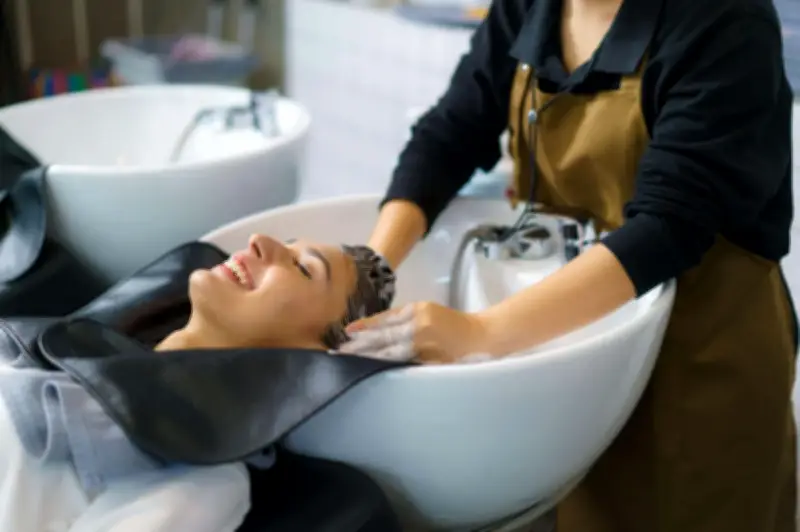
Beauty salons and shops now make up almost a third of all leisure sites across UK retail centres and take an even greater share in smaller high streets as spend on personal care shows no sign of slowing, new figures have shown.
New analysis indicates the sector makes up more than 35% of local leisure and recreation sites in smaller local centres. Hair and beauty salons alone account for around a fifth of leisure sites in smaller high streets, taking the same share as pubs, bars and cafes combined.
More than 190,000 beauty sites across the UK
The Impact Of Beauty report by Oxford Economics – which was commissioned by the British Beauty Council and backed by L’Oreal – indicates there are more than 190,000 beauty and personal care sites across the UK, of which 39% are outside large cities.
The study found that Greater London has the highest concentration of salons and beauty shops, with just under 25,000 – around 13% of the national total. This is followed by Greater Manchester and the West Midlands, which boast around 8,450 and 7,100 personal care and beauty amenities respectively, or about 4.4% and 3.7% of the national total.
Growing importance in local towns and villages
But the report showed that on a per-head basis, the regions have a greater concentration, showing the growing importance of the sector in local towns and villages across the UK. When taking population into account, Greater London has around two-and-a-half beauty and personal-care amenities for every 1,000 residents, compared with more than three in areas such as Lancashire, Devon and Torbay, and York and North Yorkshire.
Millie Kendall, chief executive of the British Beauty Council, said: “At a time when we are thinking seriously about well-being, loneliness, high-street regeneration and economic participation, we need to recognise the role that beauty businesses and professionals already play in communities across Britain.”
She added: “The report determines that beauty and personal care should be understood not simply as a consumer sector, but as part of the social and local infrastructure of everyday life in Britain, and as such must be safeguarded now and in the future.”
Consumer spending on beauty on the rise
The report also highlights the rise in spend on beauty, with a survey of consumers revealing £27 is spent on average a month on products and services and 13 minutes on average a day is dedicated to beauty and personal care.
Thierry Cheval, managing director and chairman of L’Oreal Groupe UK & Ireland, said the findings confirm beauty “has an impact in every postcode across the UK, from our homes to our high streets”. He said it was “a sector with a presence in every corner of the country, a role in people’s confidence and well-being, and a place in the daily rhythm of national life”.
It follows the Value Of Beauty report earlier this year, which found the sector employs around 422,000 people in a growing sign of its economic importance.
Beauty and personal care sites per region, adjusted for population, are as follows, according to the Impact Of Beauty report:
- Lancashire – 3.1
- Devon and Torbay – 3.1
- York and North Yorkshire – 3
- Greater Manchester – 2.9
- Greater Lincolnshire – 2.9
- North East – 2.9
- Tees Valley – 2.8
- South Yorkshire – 2.8
- West Yorkshire – 2.8
- East Midlands – 2.8